
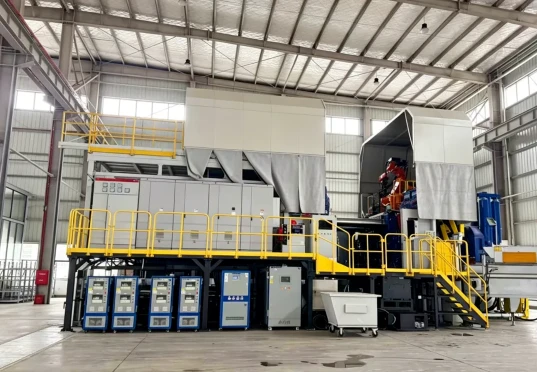
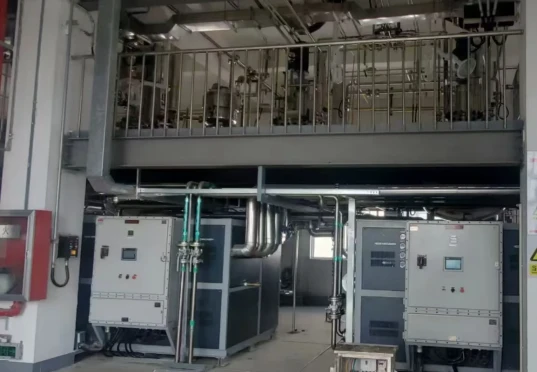
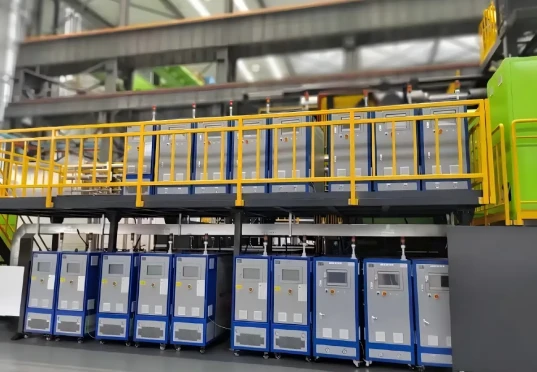
fajsdfjash ddsa dsa as sa sad sda sadfjsadjfl jsadjk fjasdlkfjaskdfdklsaj klf
jsadj
asjdklj falsdjf
jaklj

Products
Why Moving and Fixed Die Casting Molds Need Separate Temperature Control
09 September 2026
Author:AODE
share:


Large automotive chassis parts, motor housings, transmission housings, and other die-cast components often use large molds with complex cavity structures. As mold size increases and cavity geometry becomes more complicated, differences in thermal load between the moving mold and fixed mold become more pronounced.
When a single temperature control system can no longer handle both sides effectively, a dual-system high-temperature oil temperature controller allows independent temperature setting, circulation, and adjustment for the moving and fixed molds. This article explains the causes of thermal imbalance, how dual-system temperature control works, and which die-casting applications are better suited to this approach.
Why Do the Moving Mold and Fixed Mold Develop Thermal Imbalance?
During die casting, high-temperature molten metal continuously transfers heat into the mold. However, the moving mold and fixed mold do not absorb and dissipate heat at the same rate. Differences in mold structure, cooling circuits, spraying positions, demolding methods, and contact area with the casting create different thermal loads on the two sides.
The moving mold opens and closes frequently and is also affected by spraying, air blowing, and demolding, so its temperature tends to drop more quickly. The fixed mold, especially when it contains deep cavities, thick-wall areas, or locally enclosed structures, is more likely to accumulate heat. If both sides continue to use the same temperature setting, the moving mold may gradually become too cold while the fixed mold becomes too hot. Cold shuts, incomplete filling, mold sticking, and demolding problems may then occur at the same time.
For large and complex die-casting molds, die-casting mold thermal balance does not mean keeping the moving mold and fixed mold at exactly the same temperature. The key is to match each side to its own thermal load and maintain a more appropriate temperature distribution across the entire mold.
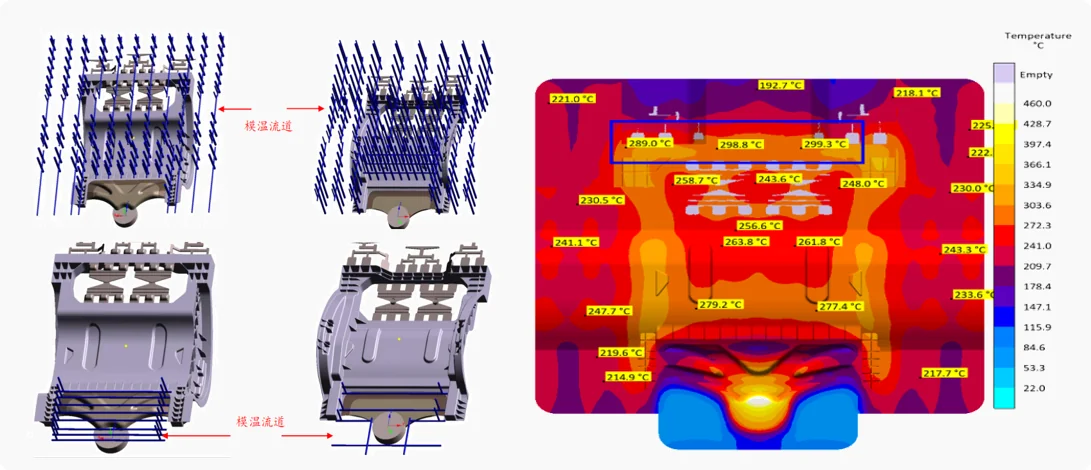
Dual-Circuit Temperature Control for Moving and Fixed Molds
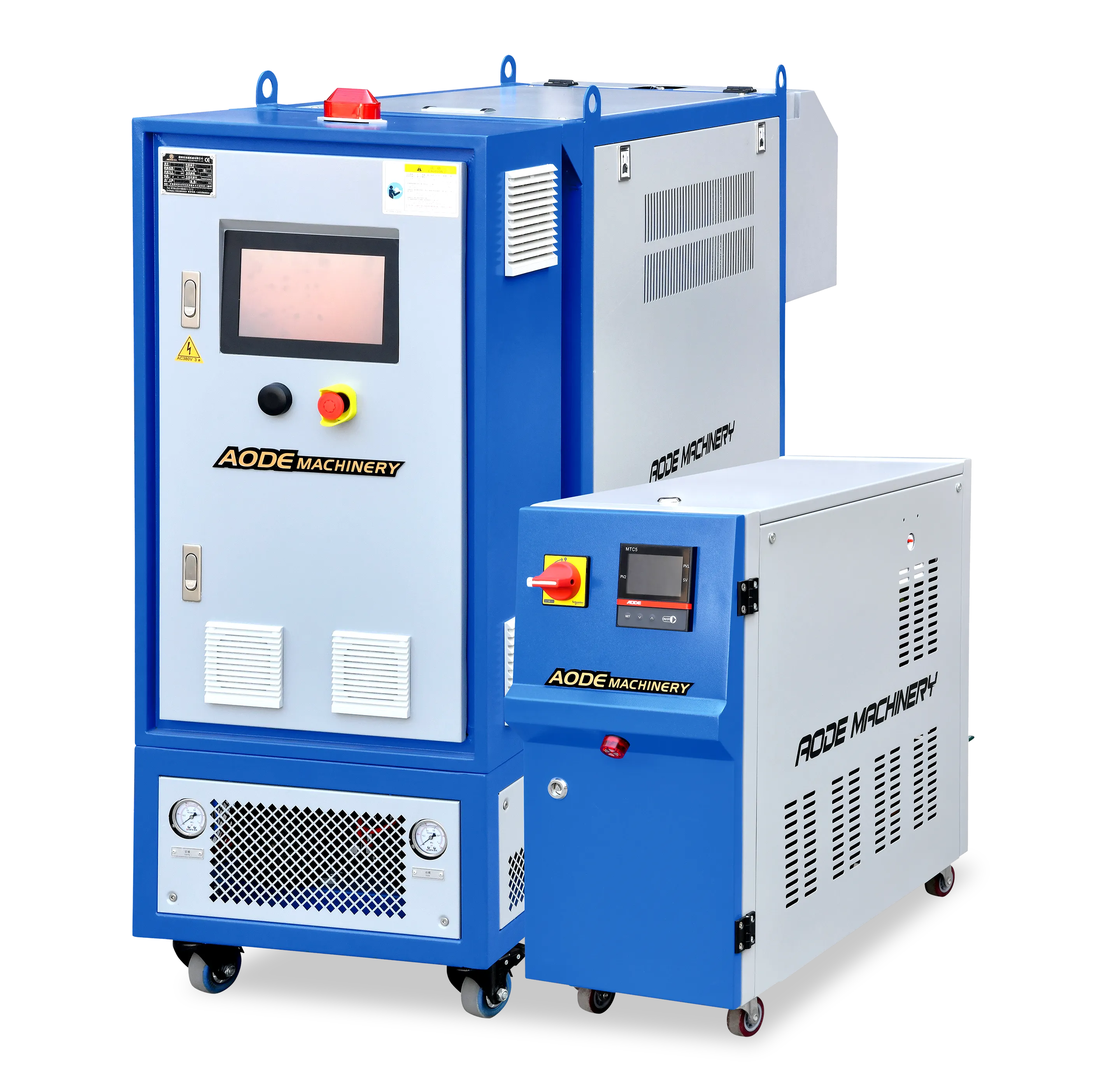
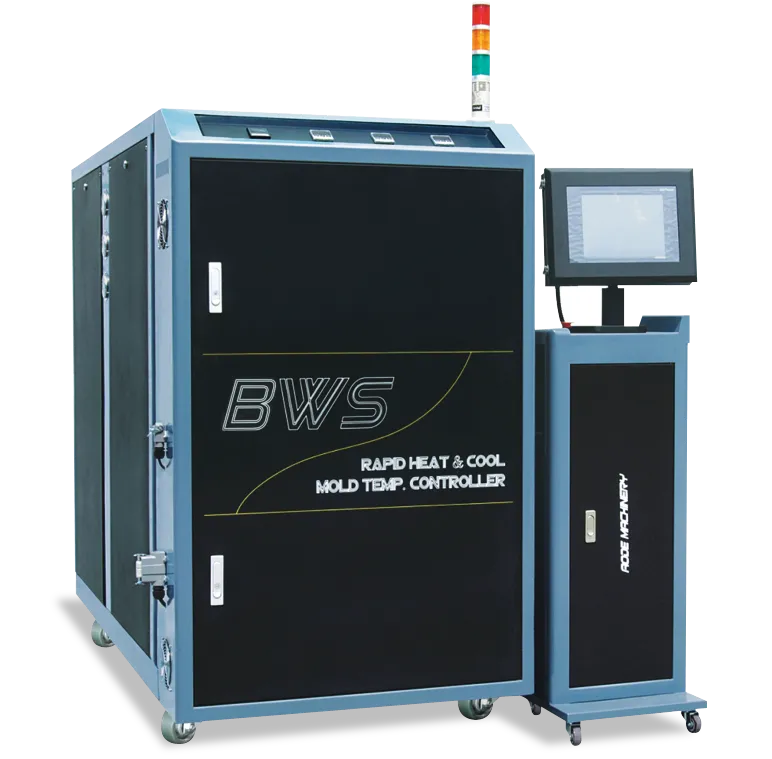
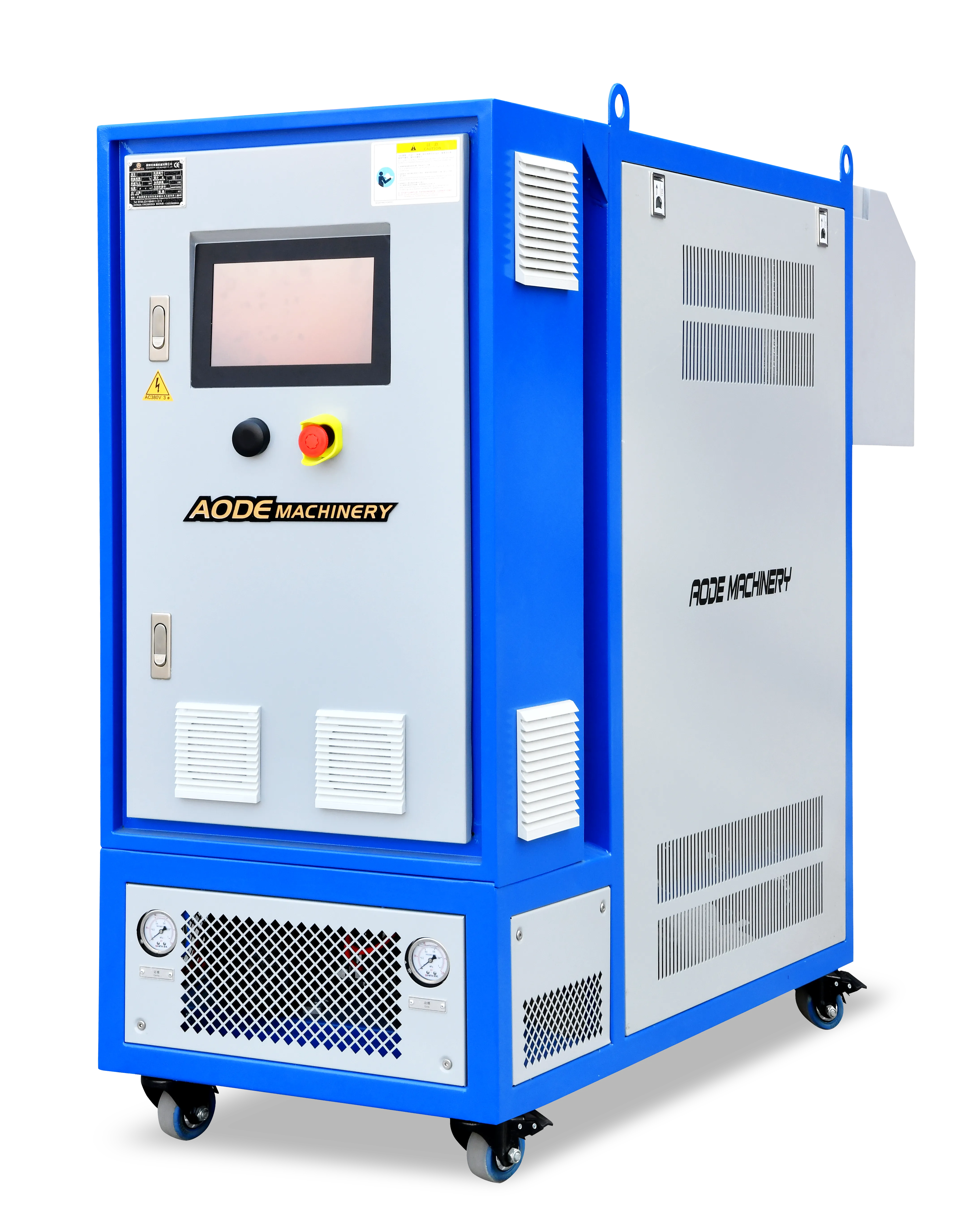
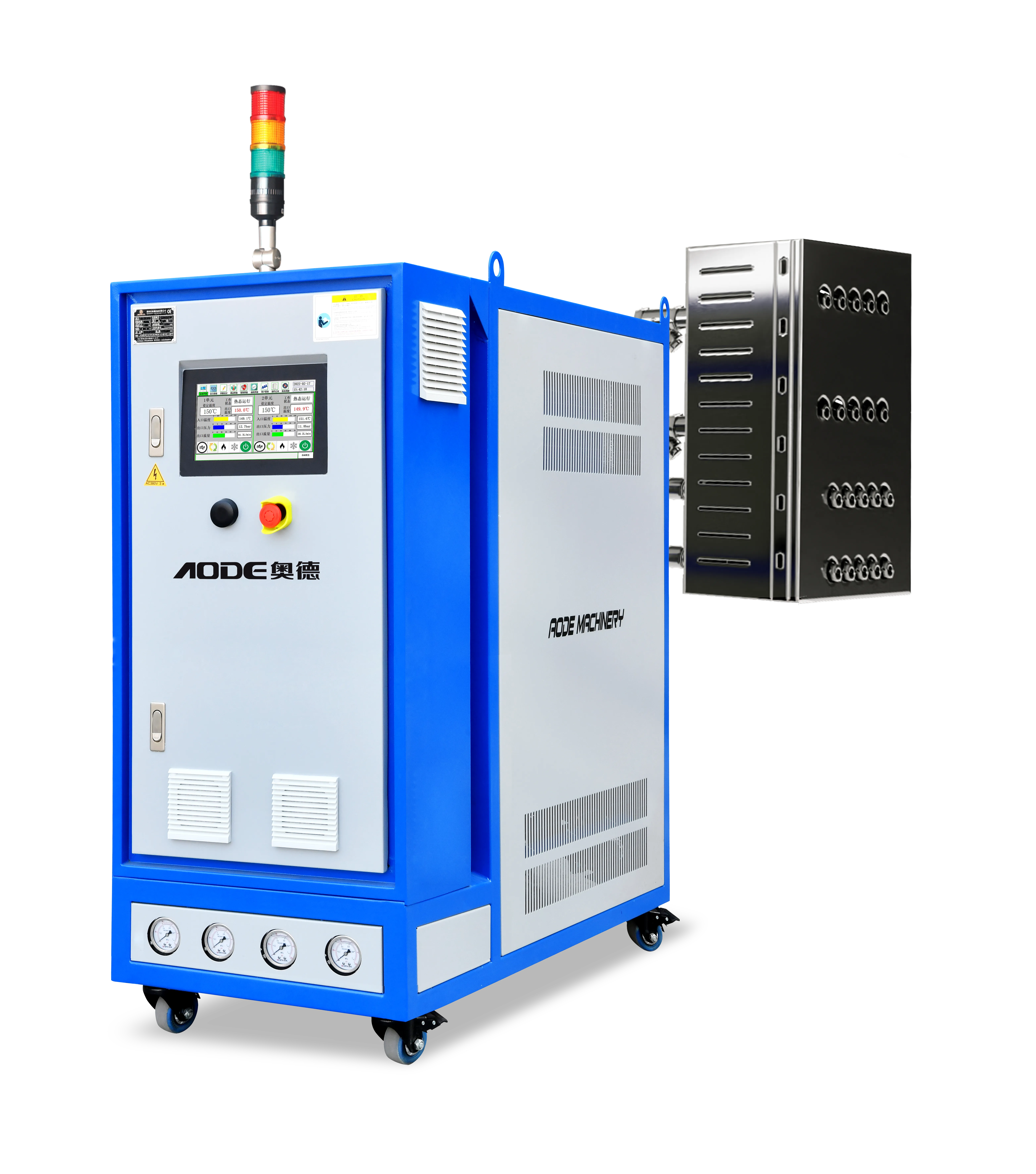
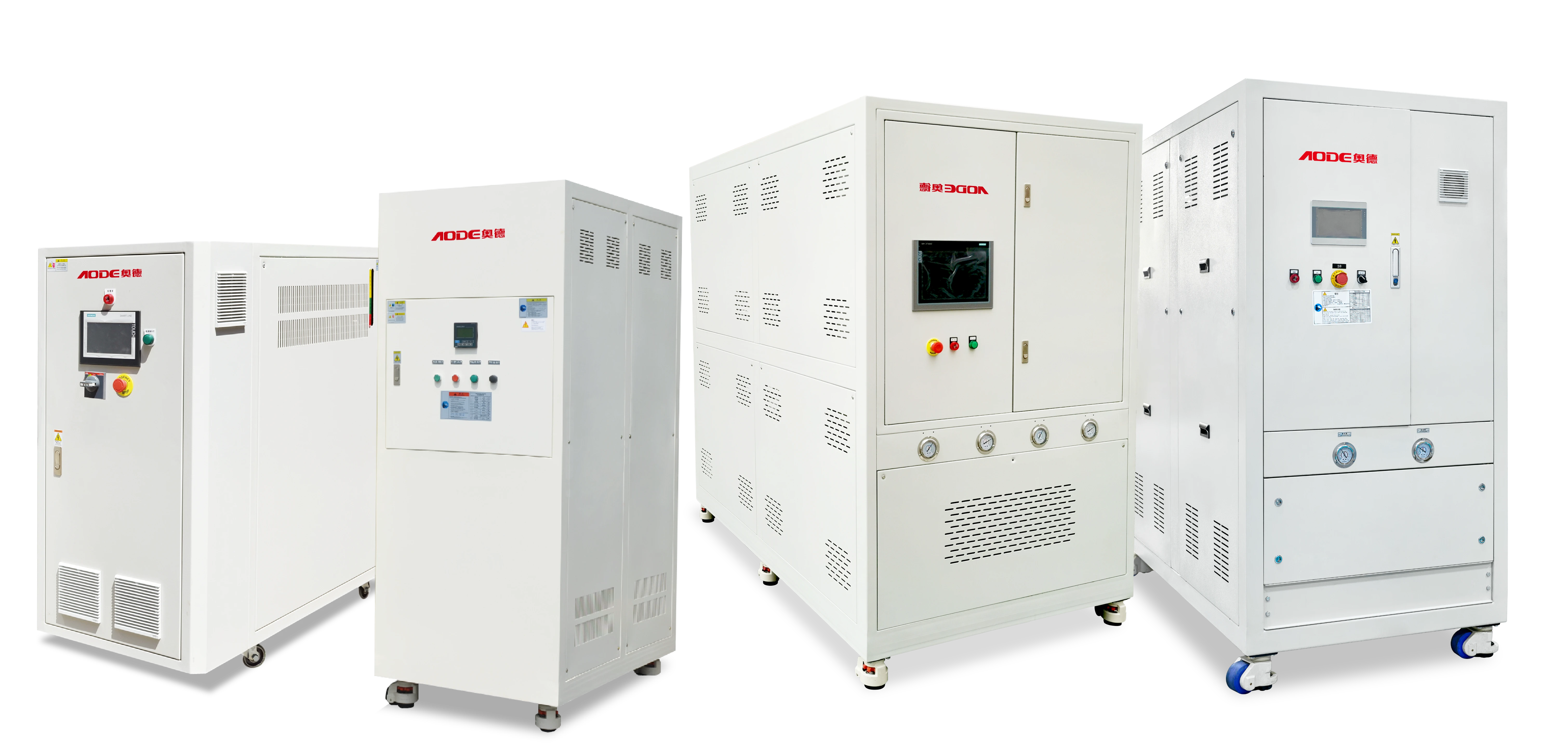
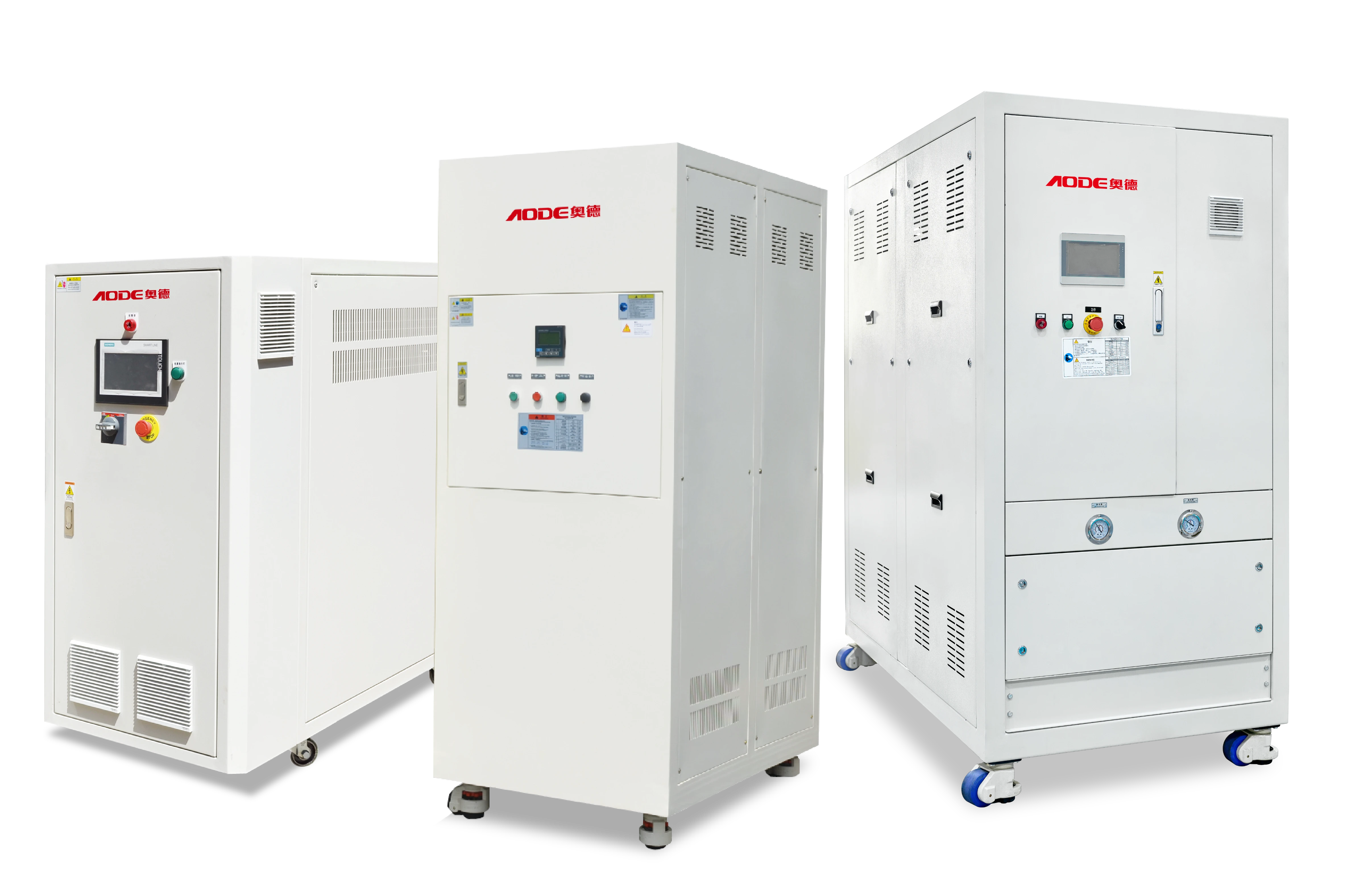
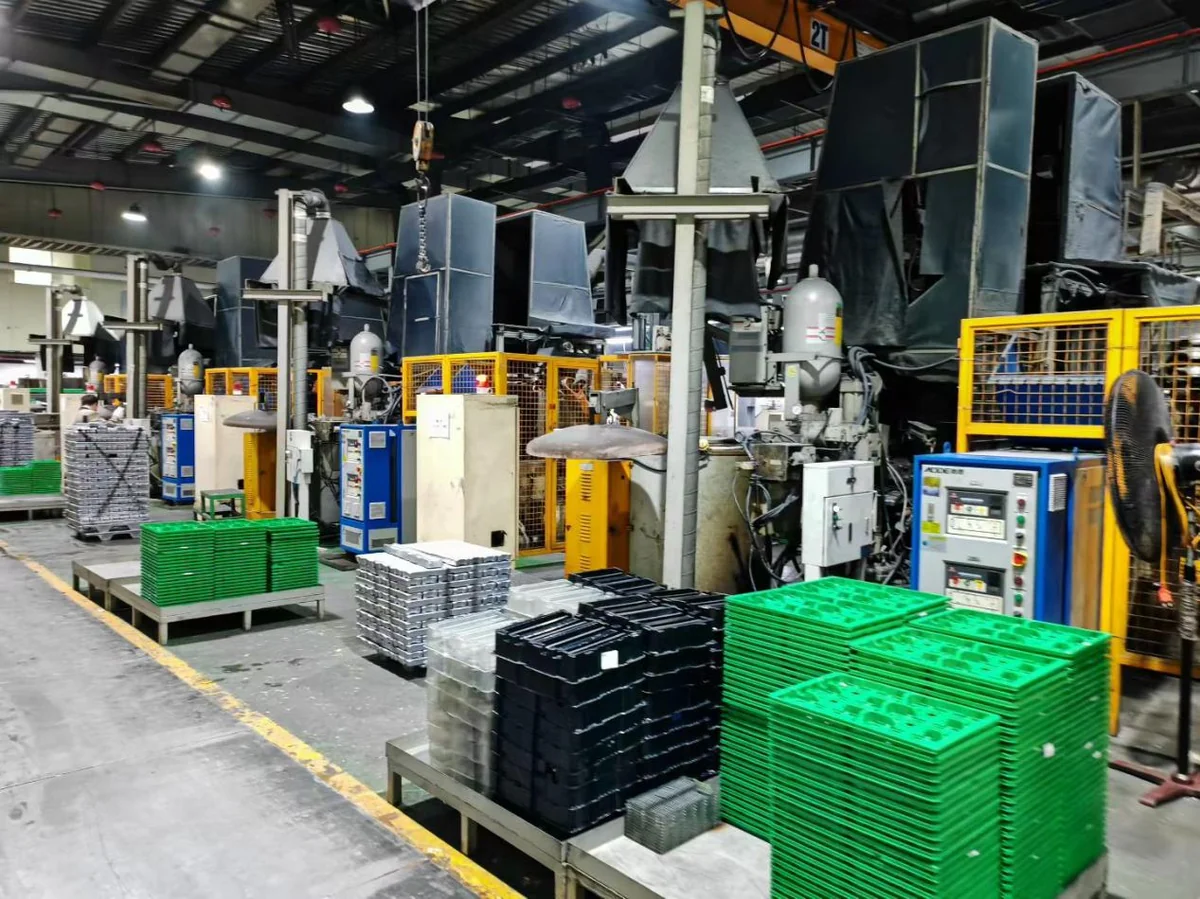
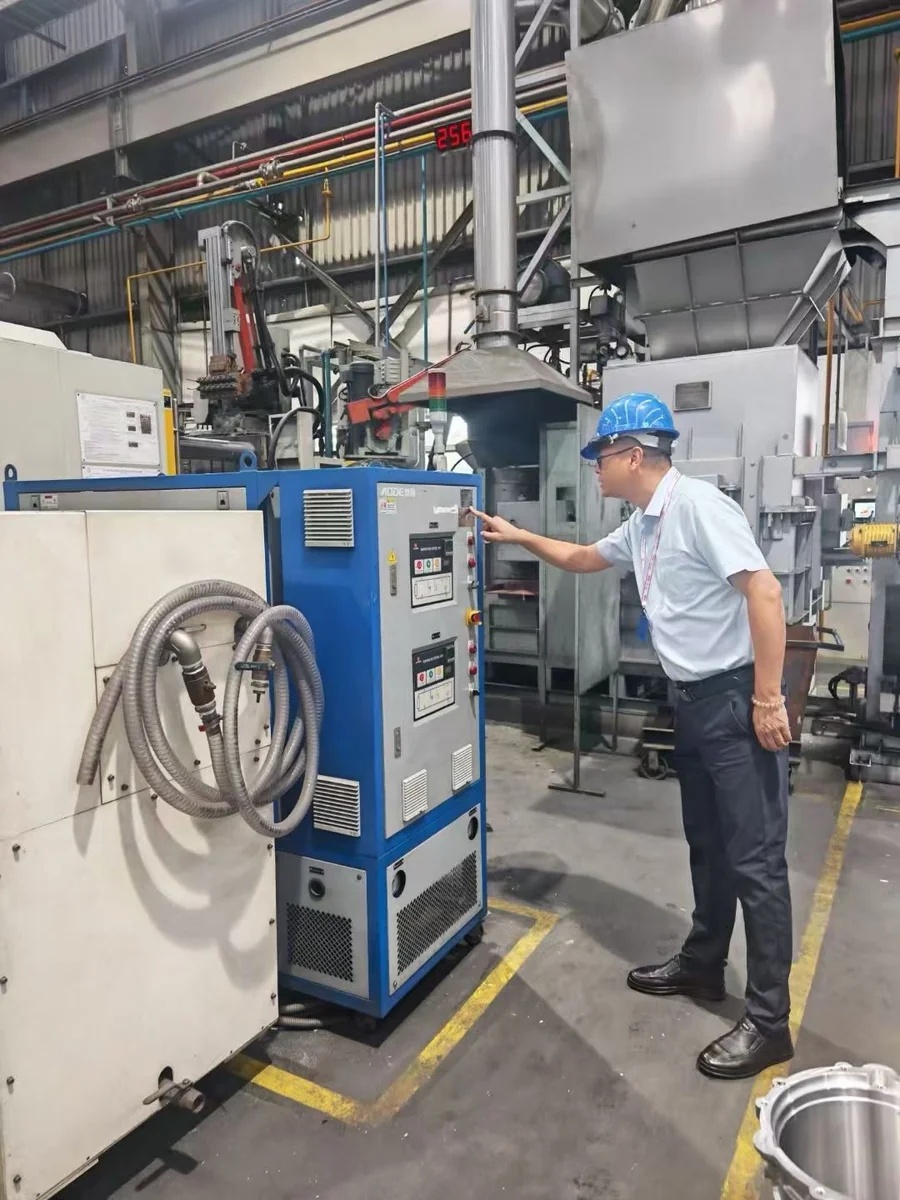
For large automotive structural die castings, the moving mold and fixed mold often experience different thermal loads, while certain core-pulling areas, cores, and locally thick sections may develop even greater temperature differences. The AODE dual-circuit high-temperature oil temperature controller uses two independent circulation circuits to manage different mold zones, allowing each circuit to operate at its own set temperature instead of using one temperature setting for multiple areas with different thermal loads.
The operating temperature range covers +45°C to 180°C. Within this range, the moving and fixed molds can be set to different temperatures according to actual process requirements. The side that loses heat more quickly can receive timely heat compensation, while the side with greater heat accumulation maintains its own temperature-control conditions. Different models are equipped with 6–12 kW heating capacity, matching different mold sizes and heat loads to reduce excessive temperature drop during continuous die casting.
Large molds usually involve longer piping and different circulation resistance across individual zones. The AODE dual-circuit high-temperature oil temperature controller offers pump flow rates of 22–150 L/min and pump heads of 13–20 m, allowing the circulation conditions to be matched to the resistance and heat-transfer requirements of the moving mold, fixed mold, and different circuits. This helps thermal oil reach the areas that actually require temperature control rather than simply maintaining the required temperature at the equipment outlet.
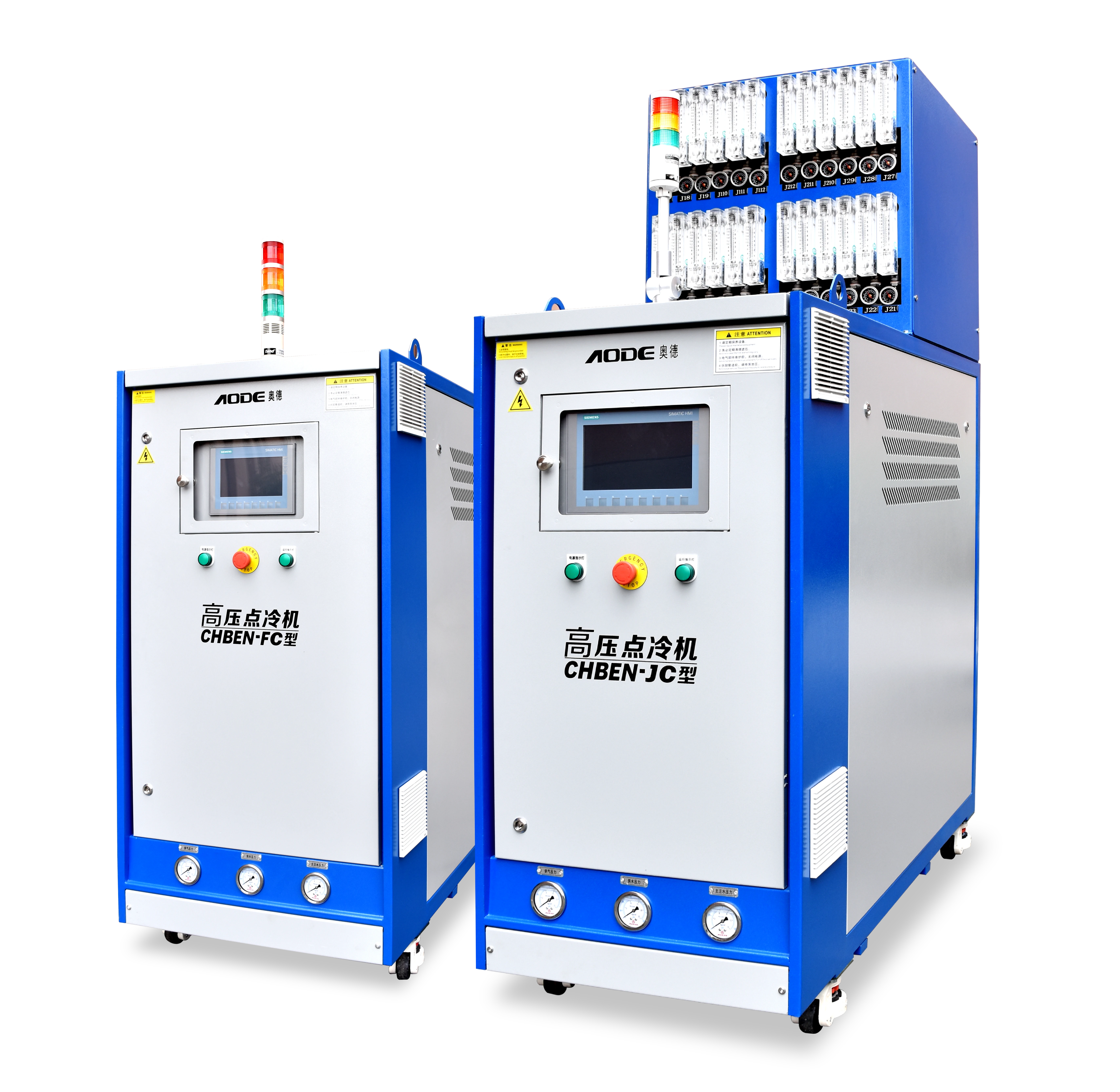
The two circuits perform temperature feedback and adjustment independently, while indirect cooling helps manage local heat changes. For more complex ultra-large die-cast structural parts, dual-circuit oil temperature control can also work together with water temperature control, high-pressure spot cooling, or mold cooling to create a zoned thermal management system.
What Large Die-Casting Problems Can Dual-System Temperature Control Address?
When a large and complex die-casting mold develops a significant temperature difference, the problem does not remain limited to mold temperature. It can directly affect casting quality, mold condition, and production cycle stability. Dual-system temperature control gives these problems a more targeted way to be addressed.
1. Reduce the Risk of Cold Shuts and Mold Sticking Occurring Together
When a local area is too cold, molten metal may lose fluidity too early, increasing the risk of cold shuts and incomplete filling. Local overheating, on the other hand, can lead to mold sticking and demolding problems.
By managing the two sides separately, the temperature of the affected area can be adjusted directly instead of using one common temperature to deal with two opposite problems.
2. Reduce Local Thermal Stress in the Mold
Large molds repeatedly experience heating and cooling during continuous production. The greater the local temperature difference, the more obvious the thermal stress can become.
Keeping different areas closer to their appropriate operating temperatures helps reduce repeated thermal shock and creates more favorable conditions for the mold during long-term operation.
3. Shorten Process Adjustment and Troubleshooting Time
When defects are concentrated on one side of the mold, engineers can inspect and adjust the corresponding temperature-control circuit instead of changing the temperature of the entire mold.
For structurally complex die-cast parts such as automotive chassis components, motor housings, and transmission housings, this zoned approach makes it easier to identify the source of the problem and simplifies process adjustment.
4. Reduce Production Cycle Fluctuations During Long Runs
After several hours of continuous production, heat gradually accumulates and temperature differences that were initially small may become more noticeable. Once mold temperature begins to drift, operators may need to wait for cooling, readjust parameters, or change the spraying cycle.
A dual system makes it easier to keep both mold halves within their required temperature ranges and maintain a more consistent production cycle.
Which Die-Casting Molds Are Better Suited to a Dual-System High-Temperature Oil Temperature Controller?
Not every die-casting mold requires a dual system. Whether the moving mold and fixed mold should be controlled separately mainly depends on the difference in thermal load between the two sides, the complexity of the mold structure, and whether a single system can still maintain a reasonable temperature distribution.
| Die-Casting Application | Typical Characteristics | Why a Dual System Is More Suitable |
|---|---|---|
| Large automotive chassis parts | Large mold size and wide heated area | Thermal-load differences between moving and fixed molds are more easily amplified |
| Motor housings | Deep cavities, local thick-wall areas, complex structures | Local heat accumulation and insufficient filling temperature may occur at the same time |
| Transmission housings | Multiple ribs and complex cavity structures | Different areas have significantly different temperature and heat-transfer requirements |
| Large multi-circuit molds | Long piping and different circuit resistance | A single circulation condition is difficult to apply effectively to all areas |
| Long-cycle continuous die casting | Long operating periods and continuous heat accumulation | Temperature differences between the two sides are more likely to increase during production |
If production already shows a growing temperature difference between the moving and fixed molds, cold shuts and mold sticking occurring at the same time, or frequent adjustments to spraying, cooling time, and production cycle to compensate for mold temperature problems, it is worth evaluating a dual-system solution.
Conclusion
When large and complex die-casting molds have significant differences in thermal load between the moving and fixed molds, a single system often struggles to maintain suitable temperatures on both sides over long production runs. A dual-system high-temperature oil temperature controller uses independent temperature zones and circulation circuits to address this thermal imbalance more directly.
If your automotive chassis parts, motor housings, transmission housings, or other die-casting projects are experiencing a cold moving mold, heat accumulation on the fixed mold, cold shuts and mold sticking at the same time, or increasing temperature differences during long production runs, send AODE your mold operating temperature, number of circuits, and current temperature difference. We can evaluate whether dual-system temperature control is suitable for your process and match the corresponding high-temperature oil temperature controller solution.
To see how AODE high-precision temperature-control technology supports demanding molding applications, read our article on why high-precision mold temperature controllers are used in precision injection molding.
 Back to List
Previous
No more
Next
Why ±0.1°C Matters in Optical Lens Injection Moldi...
Table of Contents
×
CONTACT US
Cookie Policy
We use cookies and other tracking technologies online. Please read our Cookie Policy, which is part of this Cookie Policy , and is incorporated herein by reference.

loading...