
fajsdfjash ddsa dsa as sa sad sda sadfjsadjfl jsadjk fjasdlkfjaskdfdklsaj klf
jsadj
asjdklj falsdjf
jaklj

Products
Thermal Oil Heating System vs. Steam Heating: Which Is Better for Industrial Processes?
28 October 2026
Author:AODE
share:


A thermal oil heating system is generally suited to high-temperature indirect heating that requires controlled liquid circulation and relatively low operating pressure. Steam heating transfers heat through condensation and is often effective for rapid heat transfer or processes supported by centralized steam infrastructure.
Neither method is universally better. Operating temperature, heat demand, equipment design, and existing utilities determine the more suitable option. In continuous processes such as calendering, the selected heating medium must also accommodate changing production loads while maintaining the required roller temperatures.
How Do Thermal Oil and Steam Heating Systems Work?
Both methods transport heat from a source to processing equipment, but the mechanisms differ. Thermal oil transfers sensible heat through liquid circulation, whereas steam releases latent heat as it condenses.
1. Thermal Oil Heating Through Liquid Circulation
A thermal oil heater raises the temperature of a heat transfer fluid, which a pump circulates through insulated pipelines to rollers, reactors, or press plates. Heat passes into the processing equipment before the cooler fluid returns for reheating. Temperature sensors and a control system regulate the heat input according to the operating conditions.
Because the fluid remains liquid during normal operation, thermal oil can deliver elevated temperatures without the high saturation pressure associated with steam at comparable temperatures. However, pump pressure, piping resistance, and fluid temperature limits must still be considered.
In a calendering line, the circulating oil transfers heat through internal roller channels while the processing material absorbs energy from the roller surface. This provides a controlled liquid heating path without requiring steam condensation inside the equipment.
2. Steam Heating Through Condensation
Steam delivers heat when vapor condenses against cooler surfaces, releasing substantial latent heat at a temperature related to its pressure. This makes it effective for industrial drying, heating, and processes where rapid condensation-based heat transfer is required.
After heat exchange, condensate must be removed through properly designed drainage and steam traps. Efficient condensate recovery can reduce the amount of energy and treated water needed by the boiler system. Pressure regulation, steam quality, and water treatment are essential to reliable operation.
Thermal Oil vs. Steam: Key Differences in Industrial Heating
Temperature, pressure, control requirements, and supporting infrastructure all influence the choice between thermal oil and steam.
| Comparison Factor | Thermal Oil Heating System | Steam Heating System |
|---|---|---|
| Heat Transfer | Sensible heat carried by circulating liquid | Latent heat released during condensation |
| Operating Temperature | High-temperature indirect heating within fluid limits | Saturation temperature depends on steam pressure |
| Operating Pressure | Generally lower at comparable high temperatures | Higher saturated-steam temperatures require higher pressure |
| Temperature Control | Oil temperature, circulation flow, and control circuits | Steam pressure, flow, and condensate management |
| Main Components | Heater, pump, expansion tank, and piping | Boiler, distribution piping, traps, and condensate system |
| Maintenance | Oil condition, leakage, pump seals, and expansion management | Water treatment, steam traps, condensate, and boiler maintenance |
| Typical Applications | Heated rollers, presses, reactors, and laminating equipment | Drying, sterilization, steam-heated rollers, and process heating |
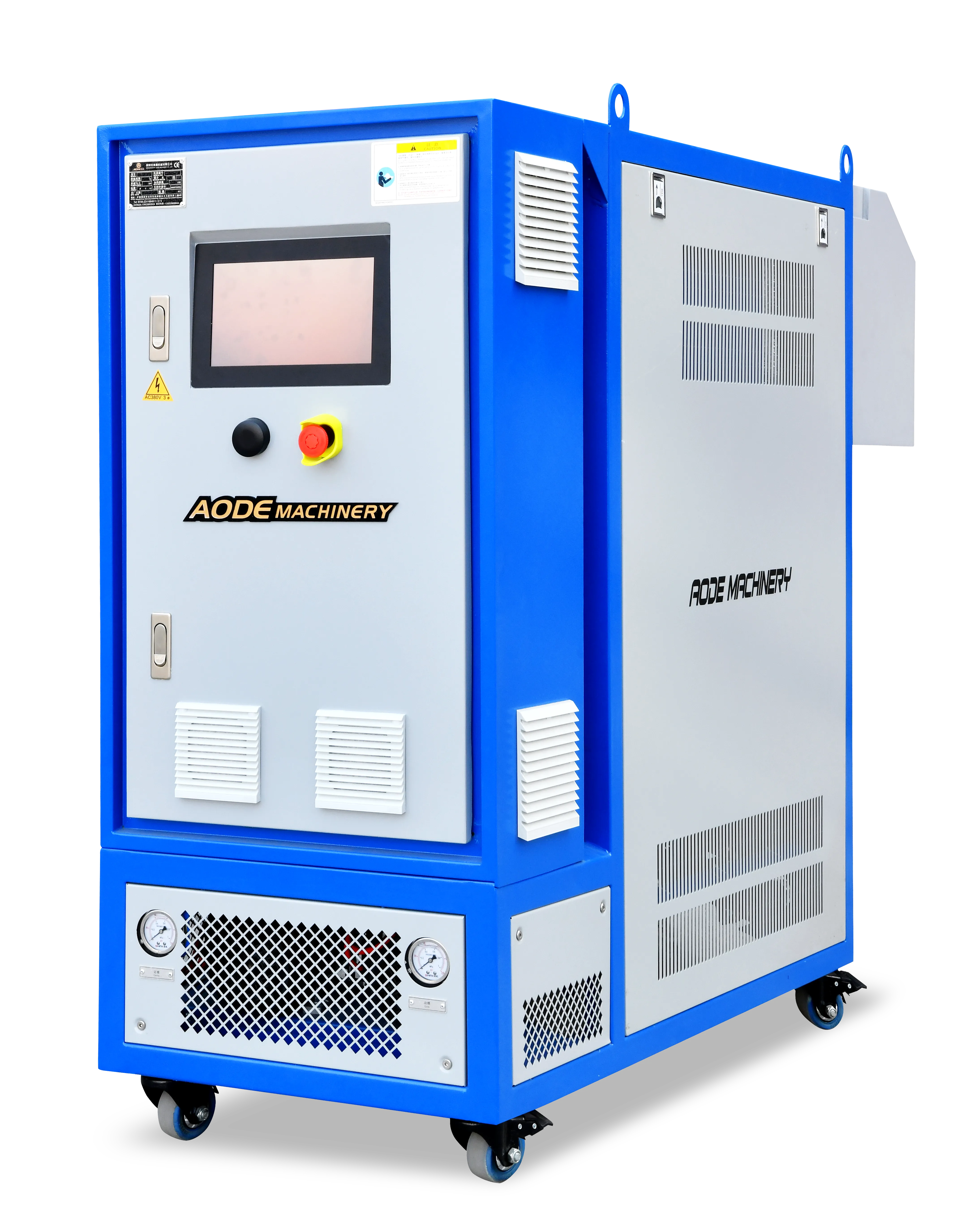
Operating temperature is an important factor when choosing between thermal oil and steam heating. For high-temperature indirect heating, AODE's thermal oil temperature control equipment operates across a range of 45–400°C, allowing manufacturers to match heating conditions to different industrial processes. Steam systems, by comparison, require higher pressure to achieve higher saturation temperatures, which influences piping design and safety requirements.
Energy efficiency depends on the complete installation, including heat generation, insulation, distribution losses, condensate recovery, and operating load. The U.S. Department of Energy recommends evaluating industrial process heating as a system rather than focusing on individual equipment specifications.
How Does Heating Medium Selection Affect Calendering Production?
Calendering relies on heated rollers to shape materials, regulate thickness, or develop surface characteristics. As material passes between the rollers, it draws heat from the equipment. Variations in line speed, processing width, and material throughput can change the heat demand during operation.
Steam and thermal oil can both provide suitable roller heating when the equipment is designed for the selected medium. Steam offers strong condensation-based heat transfer, while thermal oil allows the supply temperature to be regulated through a circulating liquid circuit. The decision should follow the roller's internal construction, target temperature, and available heating infrastructure.
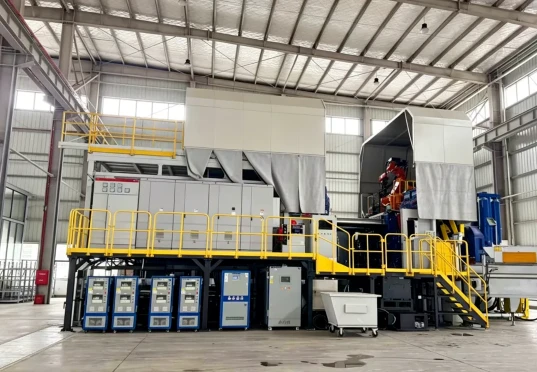
For tablecloth production, appropriate roller temperatures are important to material deformation and surface finishing. AODE's tablecloth calendering installation uses thermal oil circulation to supply process heat, demonstrating how a liquid heating circuit can be integrated with continuous manufacturing equipment.
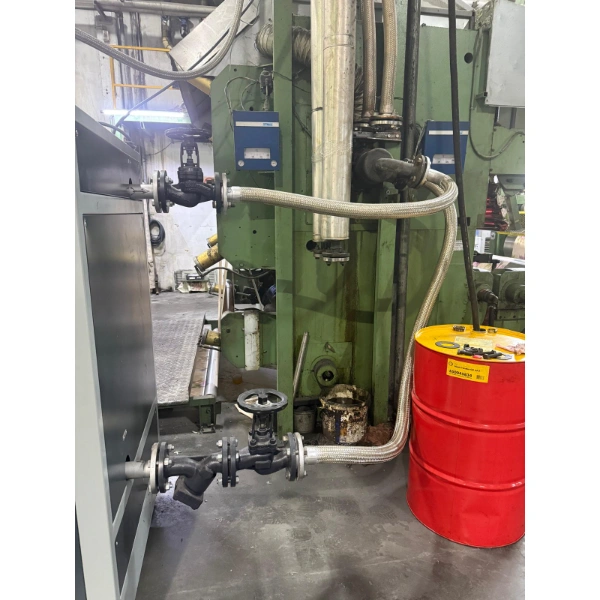
Temperature control accuracy also needs careful interpretation. A published PID control accuracy of ±1°C refers to regulation at the equipment's control measurement point; it does not guarantee the same temperature uniformity across an entire roller. Actual roller temperature distribution depends on internal channels, circulation and material loading.
What Affects Thermal Oil Heating System Performance?
An effective thermal oil system must deliver the required heat to the processing equipment, not simply achieve the temperature displayed on the controller. Heating capacity determines the energy available, while pump performance and hydraulic resistance influence how much heat the circulating fluid can carry to the load.
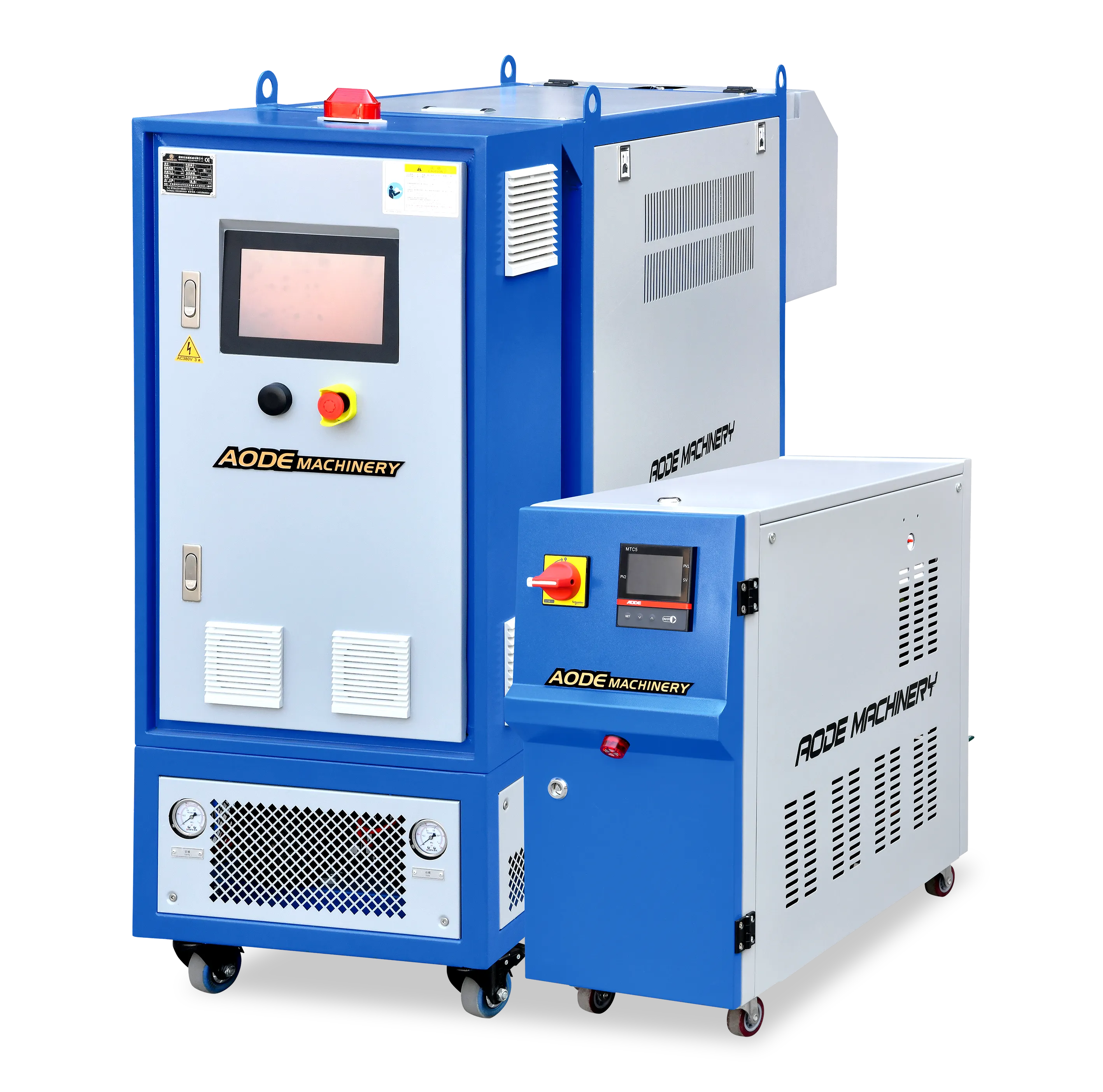
For industrial systems, heating capacities of 24–96 kW and rated circulation flows of 6–34 m³/h are represented among AODE's published equipment configurations. These values are useful sizing references, but they are not interchangeable or necessarily achieved simultaneously. The required combination depends on the process heat load, pipework, and pump operating point.
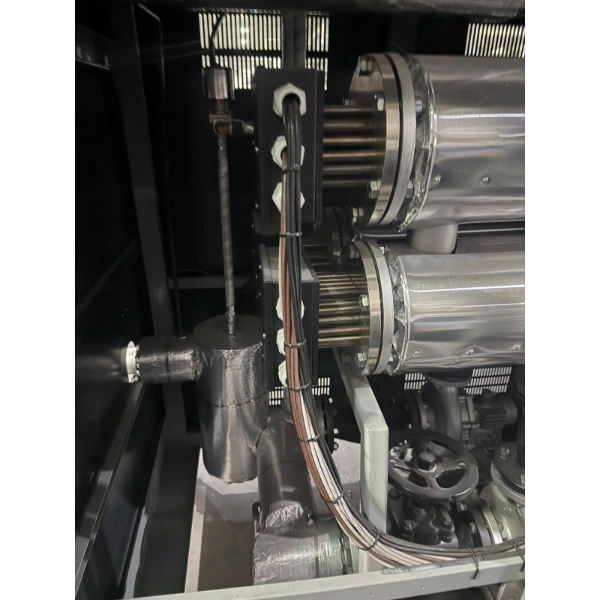
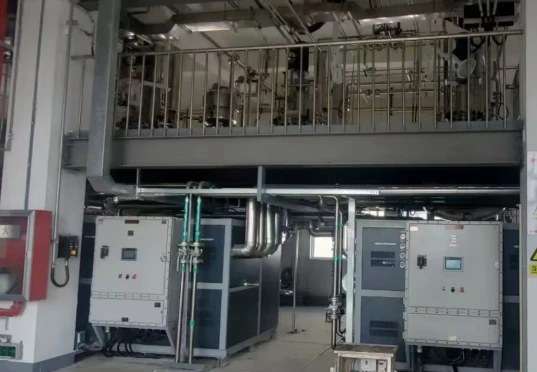
Thermal expansion must also be addressed. As oil temperature rises, its volume increases, requiring a properly sized expansion tank. Depending on the system arrangement, an elevated tank can support venting and maintain static pressure at the circulation pump inlet. Tank capacity, liquid level, temperature exposure, and connection layout must be engineered for the complete circuit.
The elevated tank structure shown in the tablecloth calendering installation provides a relevant illustration of this design consideration. Its exact function should be confirmed from the project drawings before treating it as a verified expansion tank.
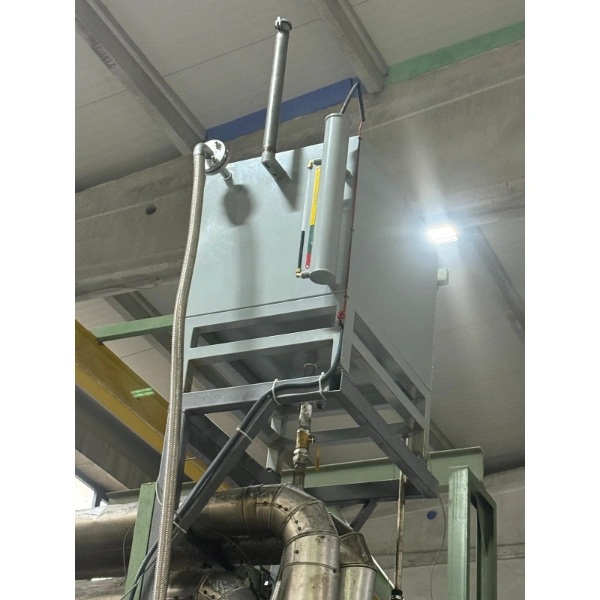
Thermal Oil Heating System for Tablecloth Calendering: An Industrial Application
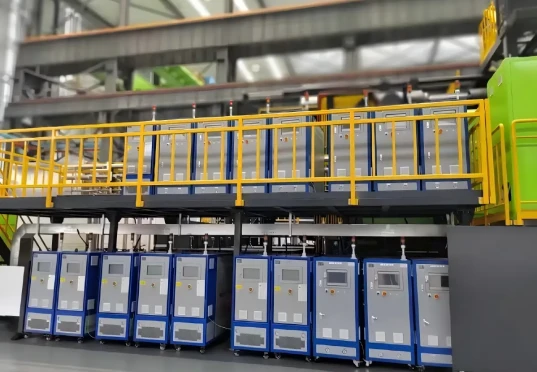
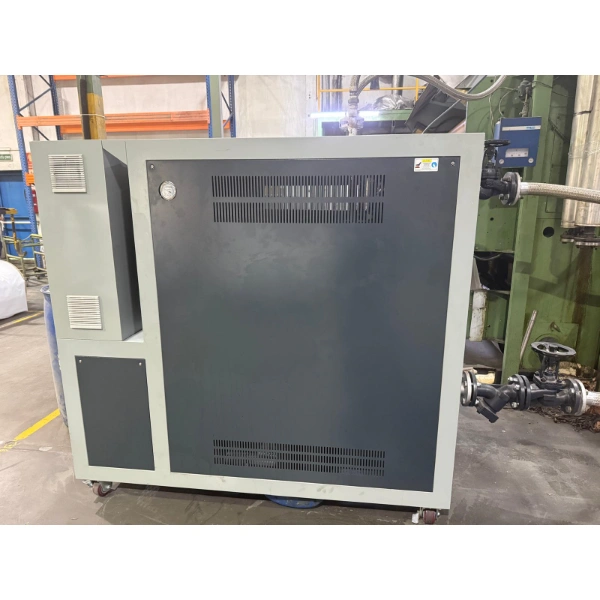
For a tablecloth calendering production line, AODE developed a customized dual-circuit thermal oil heating system to meet the temperature requirements of continuous roller processing. The two circuits can be controlled independently, allowing different sections of the production line to receive heat according to their operating needs.
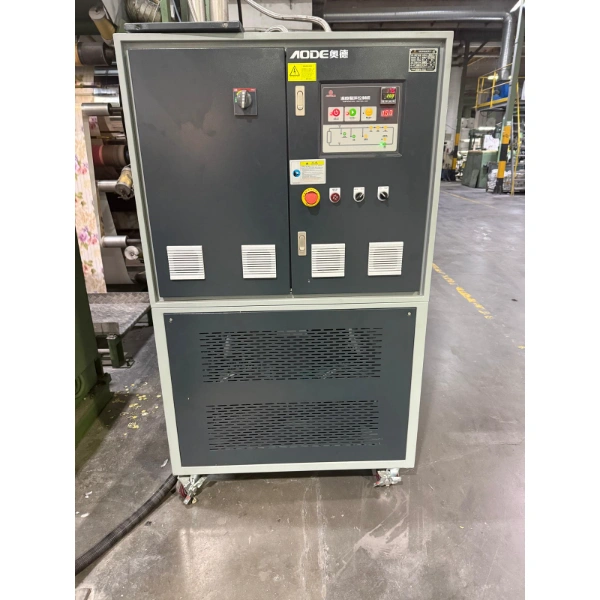
The system combines dedicated heating units, insulated oil circulation pipelines, and a centralized electrical control cabinet. Each circuit has its own temperature regulation, helping operators manage different heating demands without applying a single temperature setting across the entire line. An elevated oil tank is incorporated into the piping arrangement to accommodate thermal expansion and support reliable oil circulation.
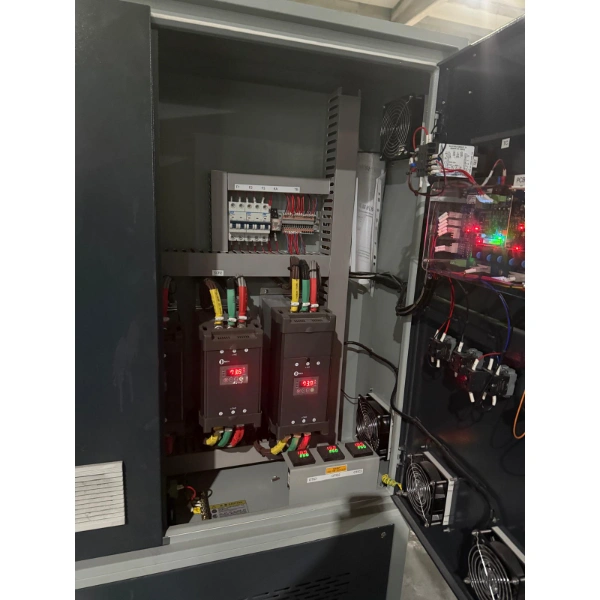
The installation was also designed around the workshop's equipment layout, with piping connections and maintenance access considered during integration. This dual-circuit configuration allows the heating system to accommodate different process requirements while supporting consistent temperature control during tablecloth calendering.
How to Choose Between Thermal Oil and Steam Heating for Your Process?
Selecting the right heating system depends on process temperature, heat demand, and operating costs. The following factors can help manufacturers determine which solution better suits their production requirements.
1. Determine the Required Operating Temperature
Thermal oil is generally suitable for high-temperature indirect heating at relatively low operating pressures, while steam provides effective condensation-based heat transfer. The choice should reflect the actual process temperature and equipment design rather than the heater's maximum temperature rating.
2. Evaluate Heat Load and Temperature Control Requirements
Heating capacity must match the process load during startup and continuous operation. For production lines requiring different temperature settings, independently controlled thermal oil circuits can provide flexible heating, while steam systems can manage separate zones through pressure regulation and condensate control.
3. Compare Installation and Operating Costs
Thermal oil systems require pumps, expansion tanks, and fluid maintenance, whereas steam systems involve boilers, water treatment, and condensate management. Existing infrastructure, energy consumption, and maintenance costs should be evaluated together to determine the more economical long-term option.
Frequently Asked Questions About Thermal Oil and Steam Heating
Q1: Can thermal oil heating replace steam heating in an existing production line?
Thermal oil can replace steam in certain indirect heating processes, but the existing equipment must support liquid circulation. Steam-heated rollers, heat exchangers, and piping may require modifications because the two media have different heat-transfer and hydraulic characteristics. A conversion should account for operating temperature, pump requirements, control systems, safety measures, and installation costs before changing the heating medium.
Q2: Is thermal oil heating more energy efficient than steam?
Neither method is inherently more efficient. Thermal oil systems consume energy for heating and circulation, while steam systems incur boiler, distribution, and condensate-related losses. Insulation, operating temperature, heat recovery, and production load all influence energy consumption. The comparison should be based on the total energy required to deliver equivalent useful process heat under the same operating conditions.
Q3: Why does a thermal oil heating system need an expansion tank?
Thermal oil expands as its temperature rises, and the expansion tank accommodates the increased fluid volume. Depending on the hydraulic arrangement, it can also support gas removal and adequate static pressure at the circulation pump inlet. Proper sizing and installation are essential because an incorrectly arranged expansion system can create operational and safety problems.
Q4: Can steam and thermal oil both be used for calender roll heating?
Yes. Both heating methods are suitable for certain calendering applications when the rollers are designed for the selected medium. Steam provides condensation-based heat transfer, while thermal oil circulates through internal passages for indirect heating. The choice depends on the roller's construction, operating temperature, heat demand, and available utilities. Surface temperature distribution should be verified under actual production conditions.
Conclusion
Thermal oil heating is suited to many high-temperature indirect processes, while steam remains effective where condensation-based heating or existing steam infrastructure offers advantages. The right solution depends on the production equipment, heat demand, and operating conditions.
Planning an industrial heating system? Contact AODE to discuss your process temperature, heating load, and circulation requirements.
Technical References
1. U.S. Department of Energy — Improving Process Heating System Performance: A Sourcebook for Industry, Third Edition.
Improving Process Heating System Performance — Sourcebook
Industrial heating methods, heat transfer, energy efficiency, and system-level performance.
2. U.S. Department of Energy — Improving Steam System Performance: A Sourcebook for Industry.
Improving Steam System Performance — Sourcebook
Steam distribution, condensate recovery, water treatment, and operating efficiency.
 Back to List
Previous
No more
Next
Why Moving and Fixed Die Casting Molds Need Separa...
Table of Contents
×
CONTACT US
Cookie Policy
We use cookies and other tracking technologies online. Please read our Cookie Policy, which is part of this Cookie Policy , and is incorporated herein by reference.

loading...