
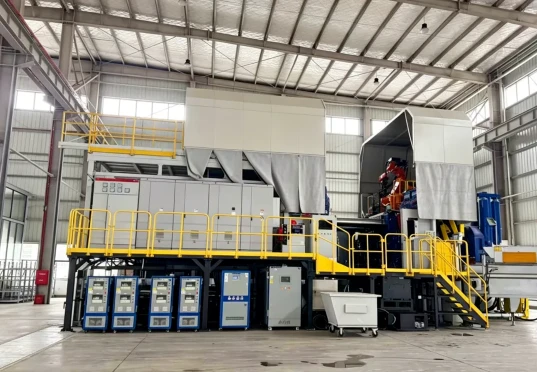
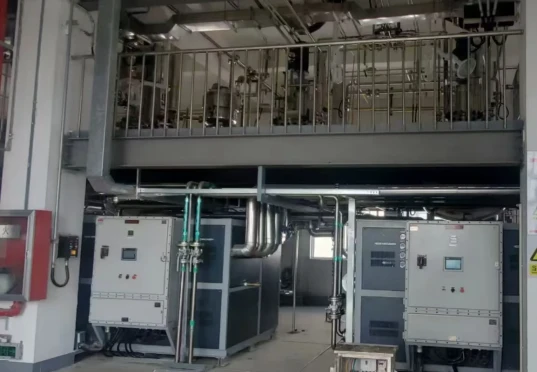
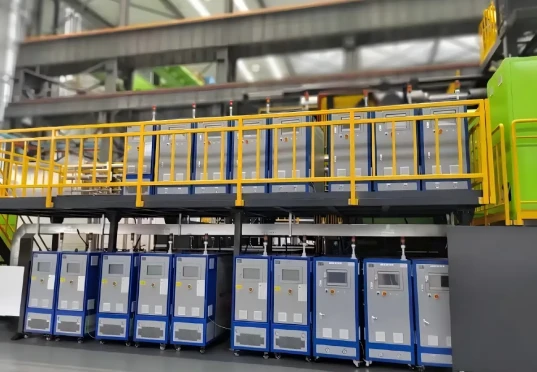
fajsdfjash ddsa dsa as sa sad sda sadfjsadjfl jsadjk fjasdlkfjaskdfdklsaj klf
jsadj
asjdklj falsdjf
jaklj

Products
Why Industrial Water Chillers Are Critical for Process Stability and Energy Efficiency
06 August 2026
Author:AODE
share:


This article will introduce why stable cooling is crucial to industrial production, and how industrial chillers help enterprises improve process stability, reduce production losses, and improve energy utilization efficiency. If you are not familiar with industrial water chillers, you can start by understanding what a water-cooled industrial chiller is and how it works.
Why Does Industrial Production Need Stable Process Cooling?
In the industrial manufacturing process, many pieces of equipment and production links continuously generate a large amount of heat. For continuous production and high-precision manufacturing processes, cooling water temperature is not simply an auxiliary condition, but a key factor affecting process stability and product consistency. A stable cooling system can help equipment remain within the set operating temperature range, avoid continuous heat accumulation, and maintain thermal balance among molds, equipment, and key process components, thereby improving the repeatability and reliability of the production process.
How Does Cooling Water Temperature Fluctuation Affect Product Quality?
Many products in industrial production are very sensitive to temperature changes. Even small fluctuations in cooling water temperature may affect the material state, forming process, and final product performance.
1. Causes Unstable Product Dimensions
In injection molding, extrusion, and precision molding processes, the cooling speed directly affects the shrinkage behavior and internal stress distribution of materials. When the cooling water temperature cannot remain stable, products from different batches may have dimensional deviations, shrinkage rate changes, and inconsistent assembly gaps, making it difficult for parts to meet design tolerance requirements.
2. Increases Surface Defects and Forming Problems
In high-speed production, multi-cavity molds, and complex structural parts processing, cooling water temperature fluctuations may also affect product surface quality. If temperature differences exist in different areas of the mold or equipment, uneven cooling can easily occur, causing products to have abnormal surface textures, warping deformation, sink marks, gas marks, and other defects. At the same time, uneven cooling may also increase residual stress inside the product, affecting the appearance and long-term performance of the product.
3. Reduces Production Yield and Production Efficiency
When the cooling system cannot continuously provide a stable temperature, production parameters often need to be adjusted frequently to adapt to constantly changing process conditions. This not only increases equipment debugging time, but may also lead to an increase in defective products, raw material waste, and lower production efficiency.
How Do Industrial Chillers Improve Process Stability?
1. Provide Precise and Stable Cooling Water Temperature
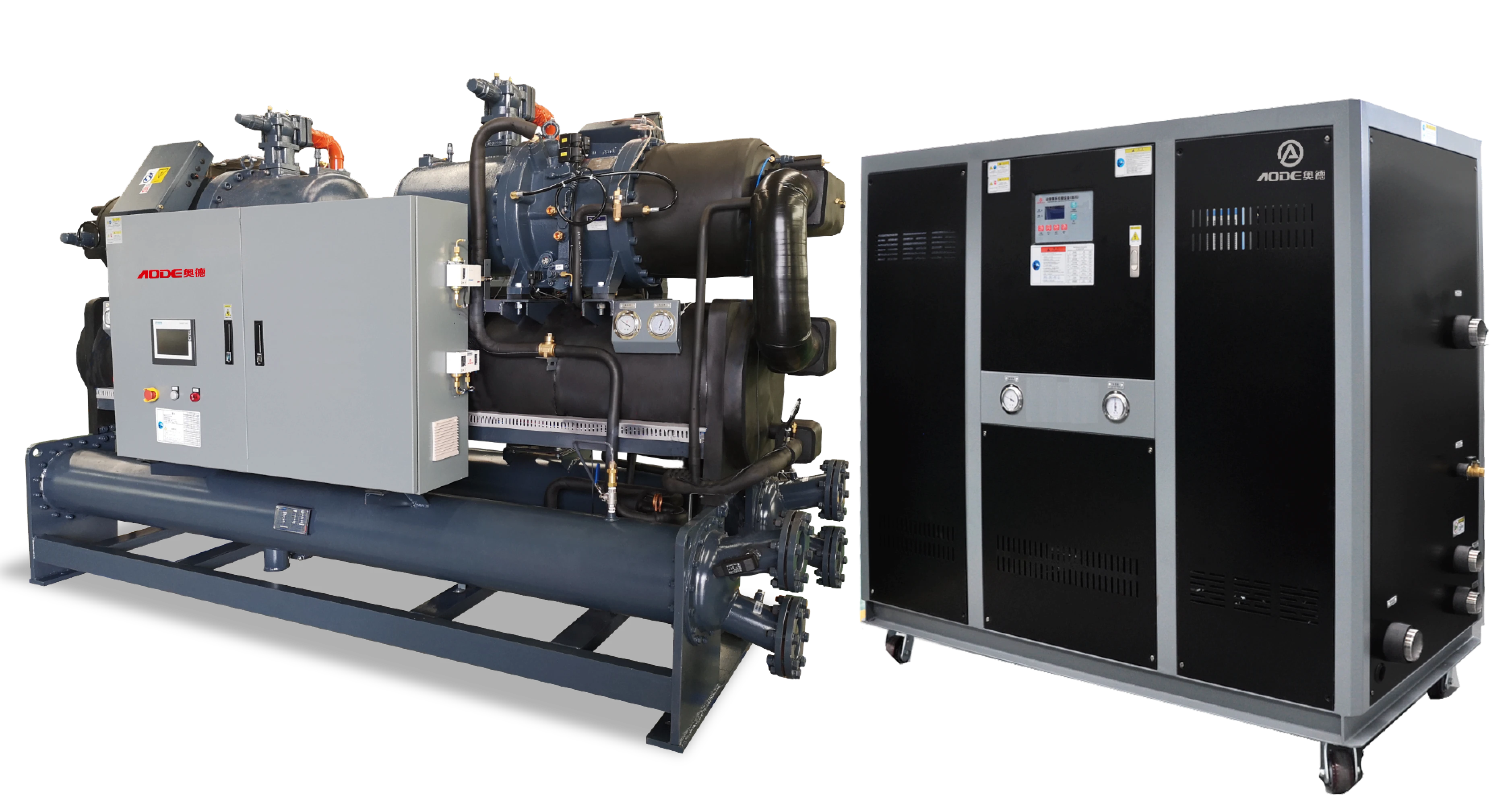
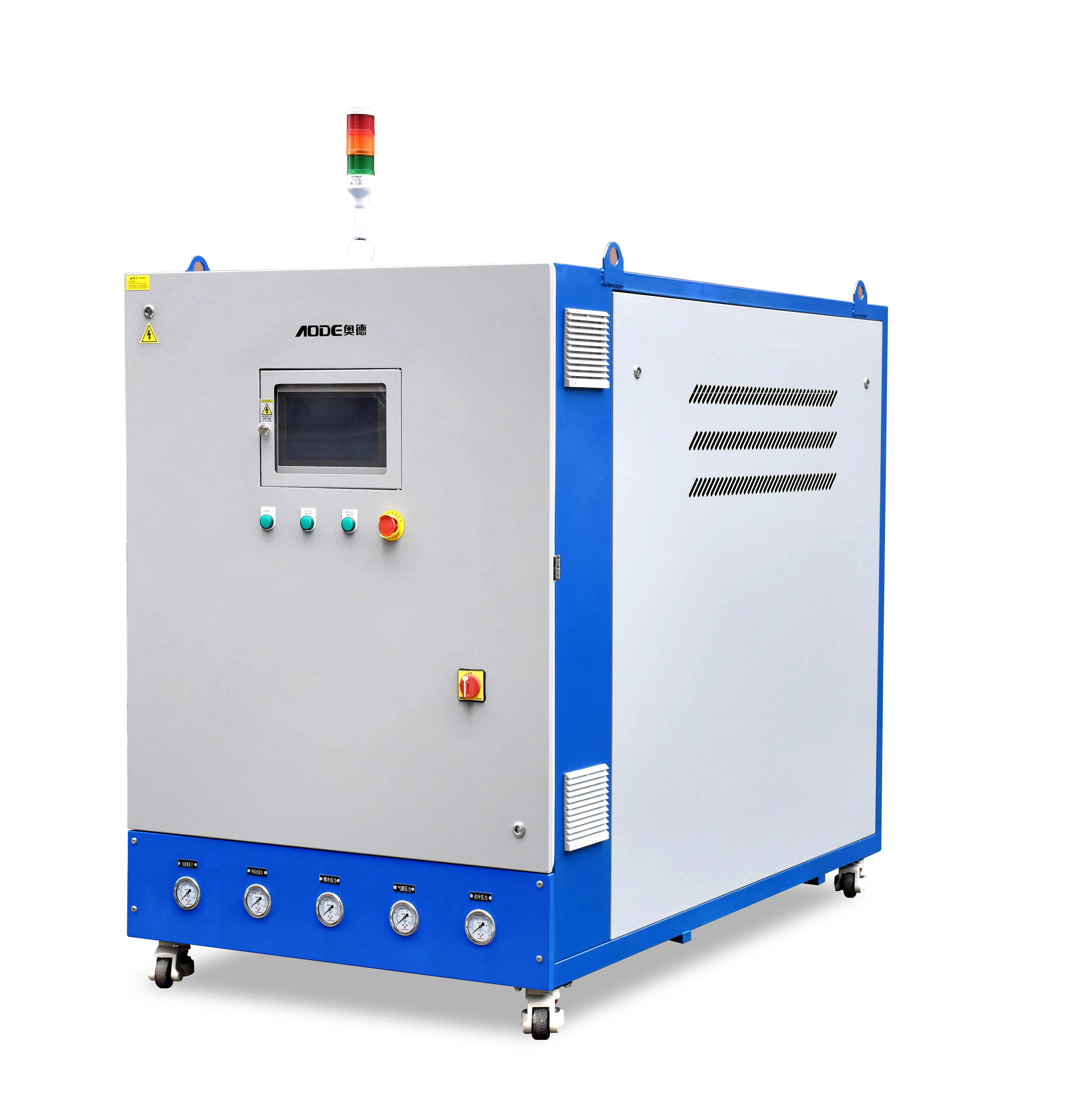
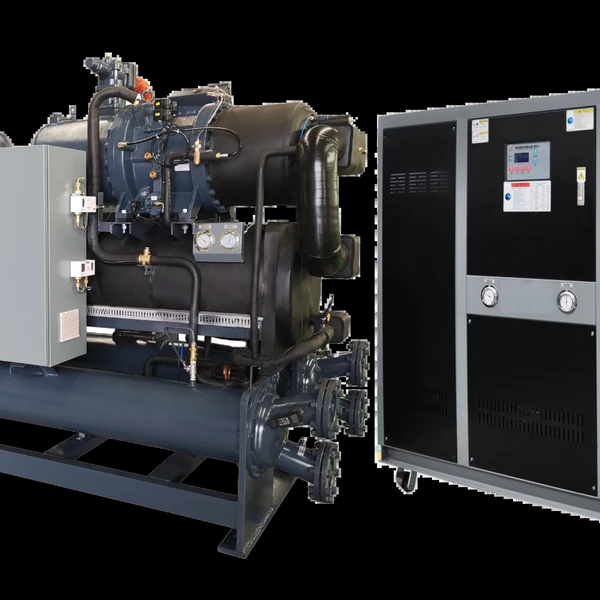
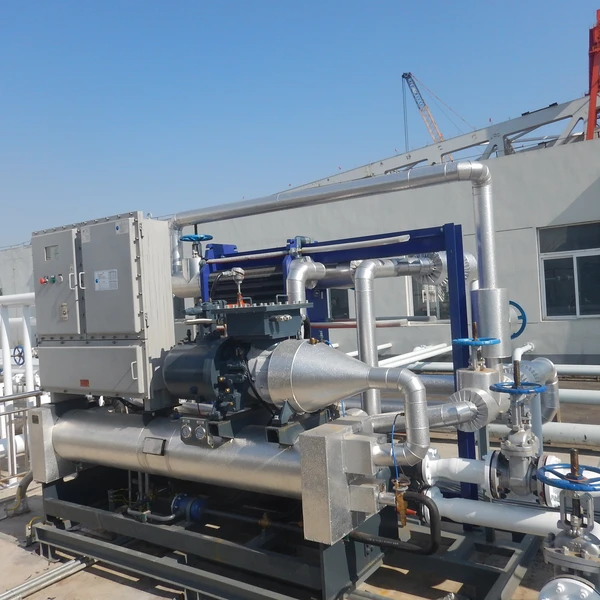
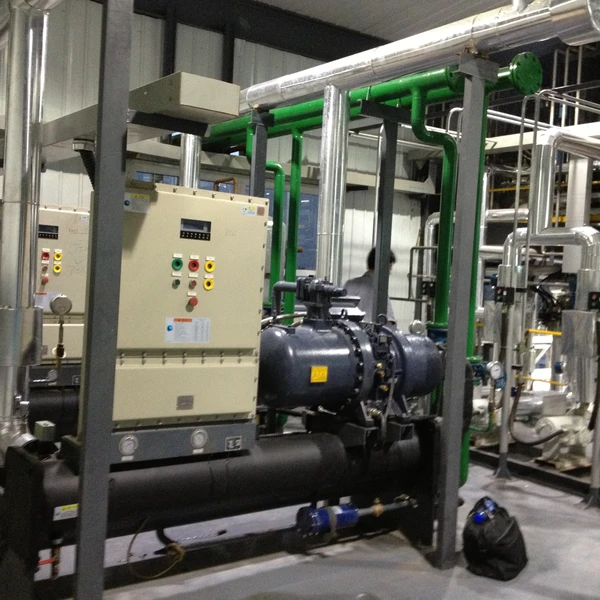
AODE water-cooled screw industrial chillers use an efficient screw compressor refrigeration system. Within the cooling water temperature control range of +7°C to +25°C, they can quickly remove the heat generated during equipment operation. In addition, through intelligent temperature sensors that monitor cooling water temperature changes in real time, the control system can automatically adjust the refrigeration output according to actual process requirements. The screw compressor refrigeration system is one of the core components that enable stable cooling performance.
2. Adapt to Different Production Load Changes
The heat load in industrial production processes is usually not fixed. For example, equipment may generate rapid temperature rise during the startup stage, cooling demand will increase during high-speed continuous production, and switching between different products may also cause changes in process conditions. AODE water-cooled screw industrial chillers have a cooling capacity range of 430.2 to 1586 kW, providing matching cooling capacity according to different production equipment and process loads.
At the same time, industrial chillers using variable-frequency compression technology can adjust the compressor operating frequency according to actual cooling demand, avoiding long-term full-load operation of the equipment. While ensuring cooling stability, they improve energy utilization efficiency and reduce long-term operating costs.
How Industrial Water Chillers Reduce Downtime and Production Waste with Stable Cooling
1. Reduces Equipment Alarms and Unplanned Downtime
Many pieces of industrial equipment are equipped with temperature protection mechanisms. When the cooling water temperature is too high, cooling capacity is insufficient, or flow is abnormal, the equipment may trigger an alarm or even stop automatically to protect key components. A stable industrial chiller can continuously control the cooling water temperature, reduce equipment protection shutdowns caused by overheating, and help the production line maintain continuous operation for a longer period of time. It effectively reduces capacity loss and improves equipment utilization.
2. Reduces Rework and Material Waste
Temperature fluctuations during the production process can easily lead to unstable product quality, increasing defective products, rework, and raw material waste. AODE industrial chillers can help equipment and process systems maintain stable thermal balance by providing consistent cooling conditions. They reduce rework and additional costs in the production process.
3. Improves Energy Utilization Efficiency
Traditional cooling methods may operate in a fixed state for a long time, which can easily lead to excess cooling capacity or energy waste. AODE high-efficiency industrial chillers can adjust their operating status according to actual cooling demand. Through efficient compressors, optimized heat exchange systems, and intelligent control technology, they realize the matching of cooling capacity with production load.
Conclusion
In the modern industrial manufacturing process, stable cooling conditions have become an important foundation for ensuring production quality, improving equipment operating efficiency, and reducing manufacturing costs.
If you are looking for a cooling solution suitable for injection molding, die casting, extrusion, or other industrial production scenarios, welcome to contact AODE to obtain professional industrial chiller selection advice and customized temperature control solutions. When selecting a cooling system, it is also helpful to compare air-cooled and water-cooled chillers to find the most suitable solution for your production environment.
 Back to List
Table of Contents
×
CONTACT US
Cookie Policy
We use cookies and other tracking technologies online. Please read our Cookie Policy, which is part of this Cookie Policy , and is incorporated herein by reference.

loading...