
fajsdfjash ddsa dsa as sa sad sda sadfjsadjfl jsadjk fjasdlkfjaskdfdklsaj klf
jsadj
asjdklj falsdjf
jaklj

Products
What are The Components of a Water-Cooled Chiller?
27 July 2026
Author:
share:


What Are the Main Components of a Water Cooled Industrial Chiller?
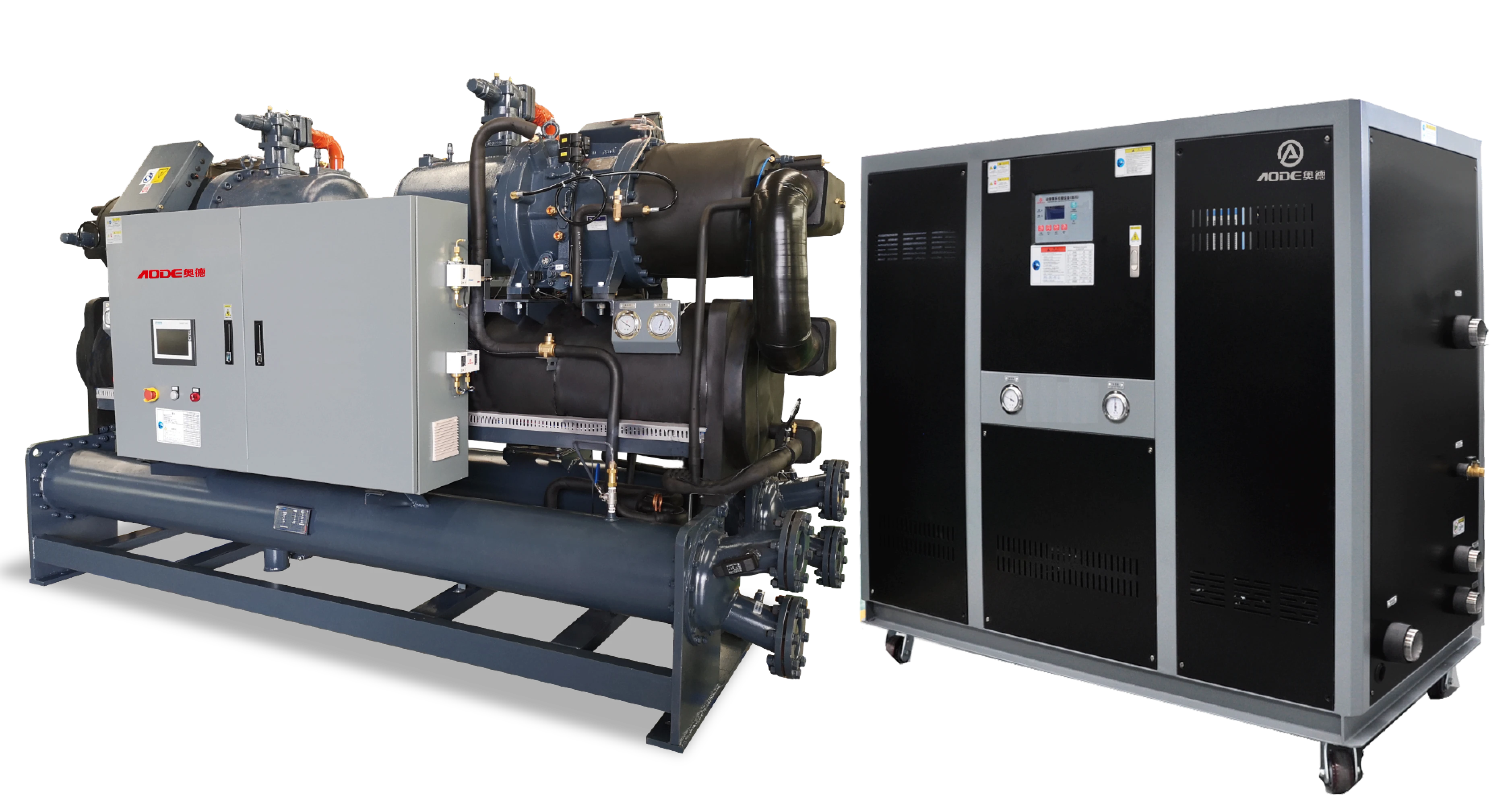
A complete water cooled industrial chiller is usually composed of a refrigeration system, a water circulation system, a cooling water system, and an electrical control system. The structure of equipment from different brands and different models may vary, but the core components are basically the same. The following table can help you quickly understand the main components of a water cooled industrial chiller and their functions.
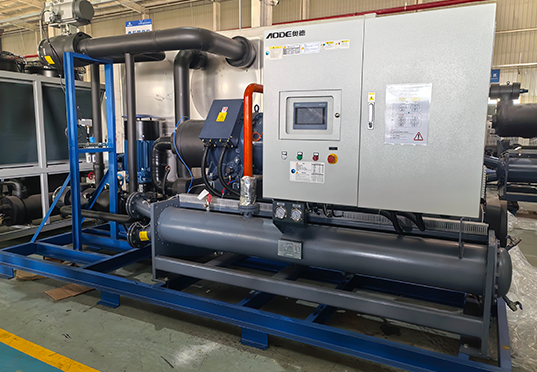
If you are new to industrial process cooling and want to understand how these systems work at a fundamental level before exploring each component in detail, you may find our introductory guide to water cooled industrial chillers helpful for building a solid foundation.
The Role of the Compressor in an Industrial Water Chiller System
The compressor is one of the very key components in industrial water chiller system, and it can also be understood as the "power core" of the entire refrigeration cycle. Its main function is to compress low-temperature, low-pressure gaseous refrigerant into high-temperature, high-pressure gaseous refrigerant and drive the refrigerant to circulate continuously in the system.
During the refrigeration process, after the refrigerant absorbs heat in the evaporator, it becomes a low-pressure gas. At this time, the compressor draws in these low-pressure gaseous refrigerants and increases their pressure and temperature through mechanical compression. The compressed high-temperature, high-pressure refrigerant then enters the water-cooled condenser, releases heat in the condenser, and gradually condenses into a liquid state.
The performance of the compressor directly affects the cooling capacity, energy consumption level, operating stability, and service life of the chiller. For industrial water chiller systems, common compressor types include scroll compressors, screw compressors, and piston compressors.
If the compressor operates unstably, it may cause slow cooling, increased energy consumption, abnormal pressure, and may even affect the continuous operation of the entire process cooling system. Therefore, when selecting a water-cooled chiller, the compressor brand, structural type, energy efficiency performance, and operating reliability are all factors that need special attention. For injection molding applications that demand both cooling precision and temperature stability, high-precision mold temperature controllers are often used alongside chillers to ensure consistent part quality.
The Role of the Evaporator in an Industrial Water Chiller System
The evaporator is the key heat exchange component in a water-cooled chiller that realizes "cooling." It allows chilled water and low-temperature, low-pressure refrigerant to exchange heat, so that the chilled water temperature is reduced, and then the low-temperature chilled water is delivered to industrial equipment or process systems for use.
Inside the evaporator, the low-temperature refrigerant after throttling by the expansion valve enters the evaporator and begins to absorb heat from the chilled water. As heat is continuously absorbed, the refrigerant gradually evaporates into gas, while the temperature of the chilled water decreases accordingly. The cooled chilled water is transported by the water pump to molds, reactors, equipment jackets, heat exchangers, or other locations that require cooling.
How Does the Condenser Remove Heat in a Water Cooled Industrial Chiller?
The water-cooled condenser is one of the important components that distinguishes a water-cooled chiller from an air-cooled chiller. Its main function is to release the heat carried by the refrigerant after compression and remove the heat through cooling water.
After the high-temperature, high-pressure gaseous refrigerant enters the condenser from the compressor, it exchanges heat with the cooling water inside the condenser. The cooling water absorbs the heat released by the refrigerant, while the refrigerant gradually condenses into a high-pressure liquid. Then, the liquid refrigerant continues to enter the expansion valve and starts the next throttling and pressure reduction process.
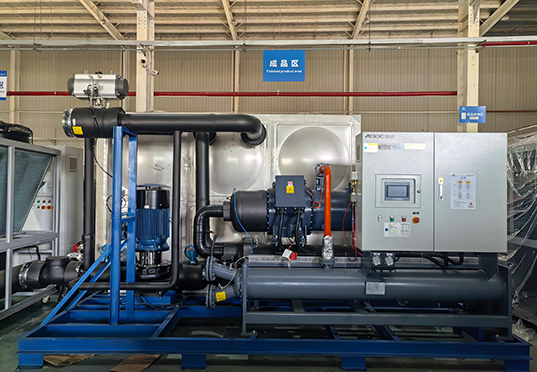
The water-cooled condenser usually needs to be used together with a cooling tower. After the cooling water absorbs heat in the condenser, its temperature rises, and then it is transported to the cooling tower for heat dissipation. After being cooled by the cooling tower, the cooling water returns to the condenser and continues to remove heat from the refrigeration system. In this way, a circulating cooling water system is formed. When planning your facility's cooling infrastructure budget, understanding the total cost factors of a water cooled industrial chiller can help you make more informed procurement decisions.
What Is the Function of the Expansion Valve in an Industrial Water Cooled Chiller?
The expansion valve, also called a throttling device, is an important component between the condenser and the evaporator. Its main function is to control the flow rate and pressure of the refrigerant, allowing the high-pressure liquid refrigerant to complete throttling and pressure reduction before entering the evaporator.
The refrigerant coming out of the condenser is usually in a high-pressure liquid state and cannot directly enter the evaporator for effective heat absorption. After passing through the expansion valve, the refrigerant pressure drops rapidly, and the temperature also decreases accordingly, becoming a low-temperature, low-pressure liquid or gas-liquid mixed state. At this time, after the refrigerant enters the evaporator, it can absorb heat from the chilled water and evaporate.
The control accuracy of the expansion valve affects the heat exchange effect of the evaporator. If the refrigerant flow rate is too large, it may cause incomplete evaporation and even create a risk of liquid hammer; if the refrigerant flow rate is too small, it will cause insufficient heat exchange in the evaporator and reduce the cooling capacity of the chiller. Therefore, the expansion valve needs to reasonably regulate the refrigerant flow according to changes in system load.
The Role of the Water Pump, Water Tank, and Control System
In addition to core refrigeration system components such as the compressor, evaporator, condenser, and expansion valve, the water pump, water tank, and control system are also indispensable parts for the stable operation of a water-cooled chiller.
Water Pump Function
The function of the water pump is to drive chilled water circulation. After the chilled water is cooled in the evaporator, it needs to be transported by the water pump to the cooling equipment, such as injection molding machine molds, reactor jackets, laser equipment, testing equipment, or process heat exchangers. After absorbing heat, the chilled water returns to the chiller evaporator for cooling again, forming a continuous chilled water circulation.
Water Tank Function
The function of the water tank is to store a certain amount of chilled water and help the system stabilize water volume and water temperature. For some working conditions with large load fluctuations, the water tank can play a buffering role and reduce the impact of sudden temperature changes on system operation. At the same time, the water tank can also make the chiller operate more smoothly during startup, shutdown, and adjustment.
Control System Function
The control system is the "brain" of the water-cooled chiller. It is used to set the target temperature, display operating parameters, monitor the status of the compressor, water pump, fan, or cooling water system, and provide safety functions such as high and low pressure protection, overload protection, antifreeze protection, water shortage protection, and phase sequence protection. Modern industrial chillers can also be equipped with touch screens, PLC control, remote communication, fault alarms, and data recording functions, helping users manage equipment operation more conveniently.
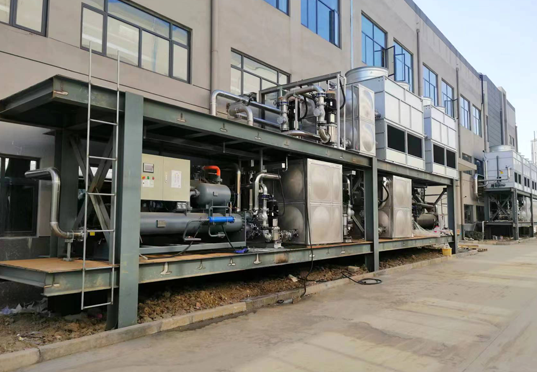
How Do the Components Work Together in an Industrial Water Chiller System?
The operation process of a industrial water chiller system can be understood as three cycles working together at the same time: refrigerant circulation, chilled water circulation, and cooling water circulation.
Refrigerant Circulation
The low-temperature, low-pressure refrigerant absorbs the heat of the chilled water in the evaporator and evaporates into gas, then is drawn into the compressor and compressed into high-temperature, high-pressure gas. After the high-temperature, high-pressure refrigerant enters the water-cooled condenser, it releases heat to the cooling water and condenses into a high-pressure liquid. Then, the liquid refrigerant is throttled and depressurized through the expansion valve and re-enters the evaporator to absorb heat, completing a full refrigeration cycle.
Chilled Water Circulation
After it is cooled by the refrigerant in the evaporator, it is transported by the water pump to industrial equipment, molds, or process systems. After the chilled water absorbs process heat, its temperature rises, and then it returns to the chiller evaporator for cooling again. The chilled water circulation determines whether the equipment can continuously provide stable cooling for the production process.
Cooling Water Circulation
The cooling water absorbs the heat released by the refrigerant in the water-cooled condenser, and after its temperature rises, it enters the cooling tower for heat dissipation. The cooled cooling water then returns to the condenser and continues to remove heat from the refrigeration system. This process determines whether the condenser can continuously and efficiently discharge heat.
These three cycles cooperate with each other and jointly determine the cooling efficiency, temperature control stability, and long-term operating performance of the water-cooled chiller.
Conclusion
A water-cooled chiller does not complete the cooling task through a single component, but through the coordinated work of multiple parts such as the compressor, evaporator, water-cooled condenser, expansion valve, water pump, water tank, and control system. Each component has a clear function and also affects the cooling efficiency, temperature stability, and operating reliability of the whole machine.
As a professional industrial temperature control equipment manufacturer, AODE can provide water-cooled chiller selection, customized design, and stable operation support according to the process cooling needs of different industries. Welcome to contact us to obtain a temperature control solution suitable for your production site.
 Back to List
Table of Contents
×
CONTACT US
Cookie Policy
We use cookies and other tracking technologies online. Please read our Cookie Policy, which is part of this Cookie Policy , and is incorporated herein by reference.

loading...