
fajsdfjash ddsa dsa as sa sad sda sadfjsadjfl jsadjk fjasdlkfjaskdfdklsaj klf
jsadj
asjdklj falsdjf
jaklj

Products
How to Maintain Stable Temperature in Cable Extrusion?
26 November 2026
Author:AODE
share:


Temperature stability is essential in cable extrusion because polymer materials must pass through melting, shaping, and cooling stages under controlled processing conditions. Excessive heat can affect material properties, while insufficient or uneven temperature control may cause unstable melt flow and variations in cable insulation.
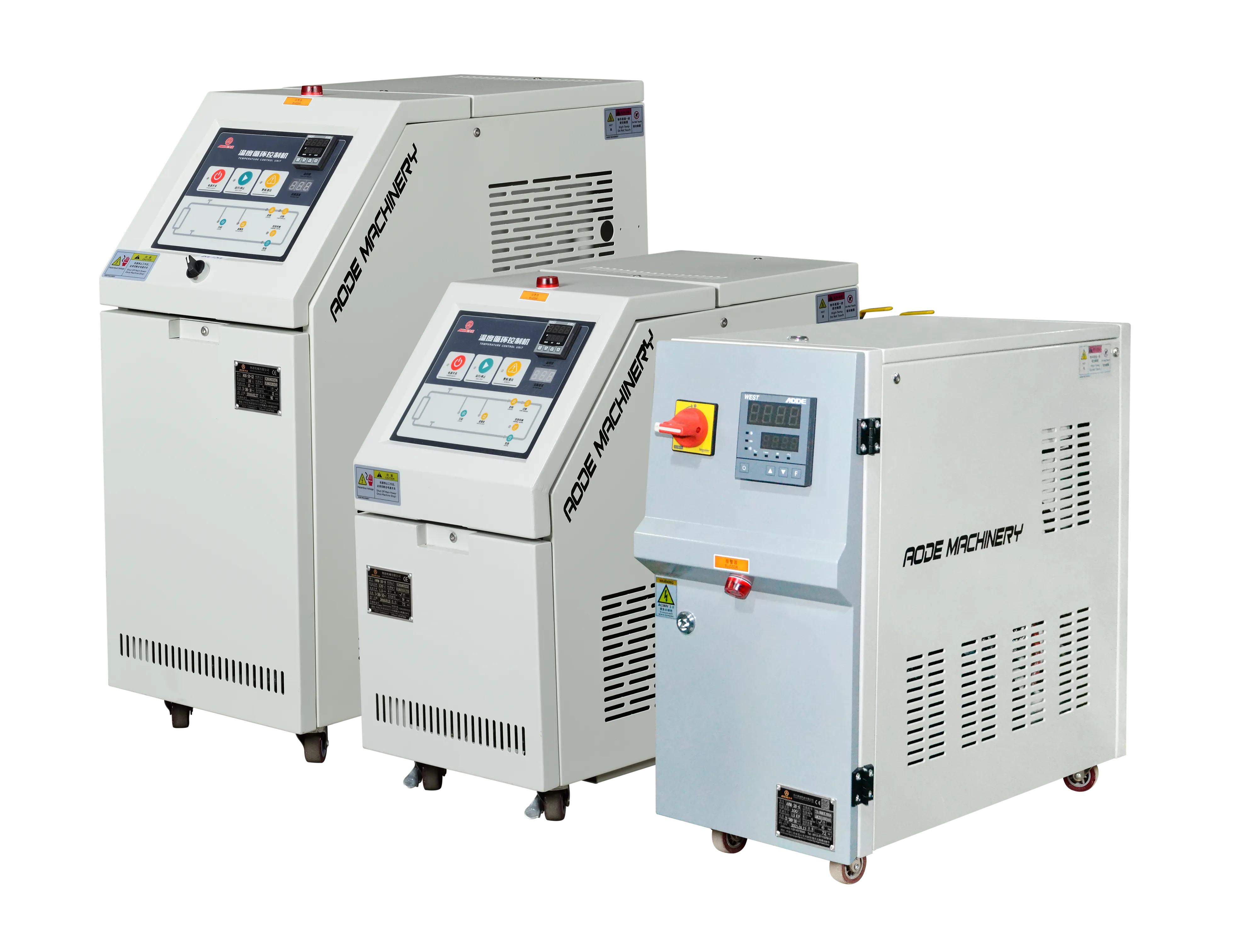
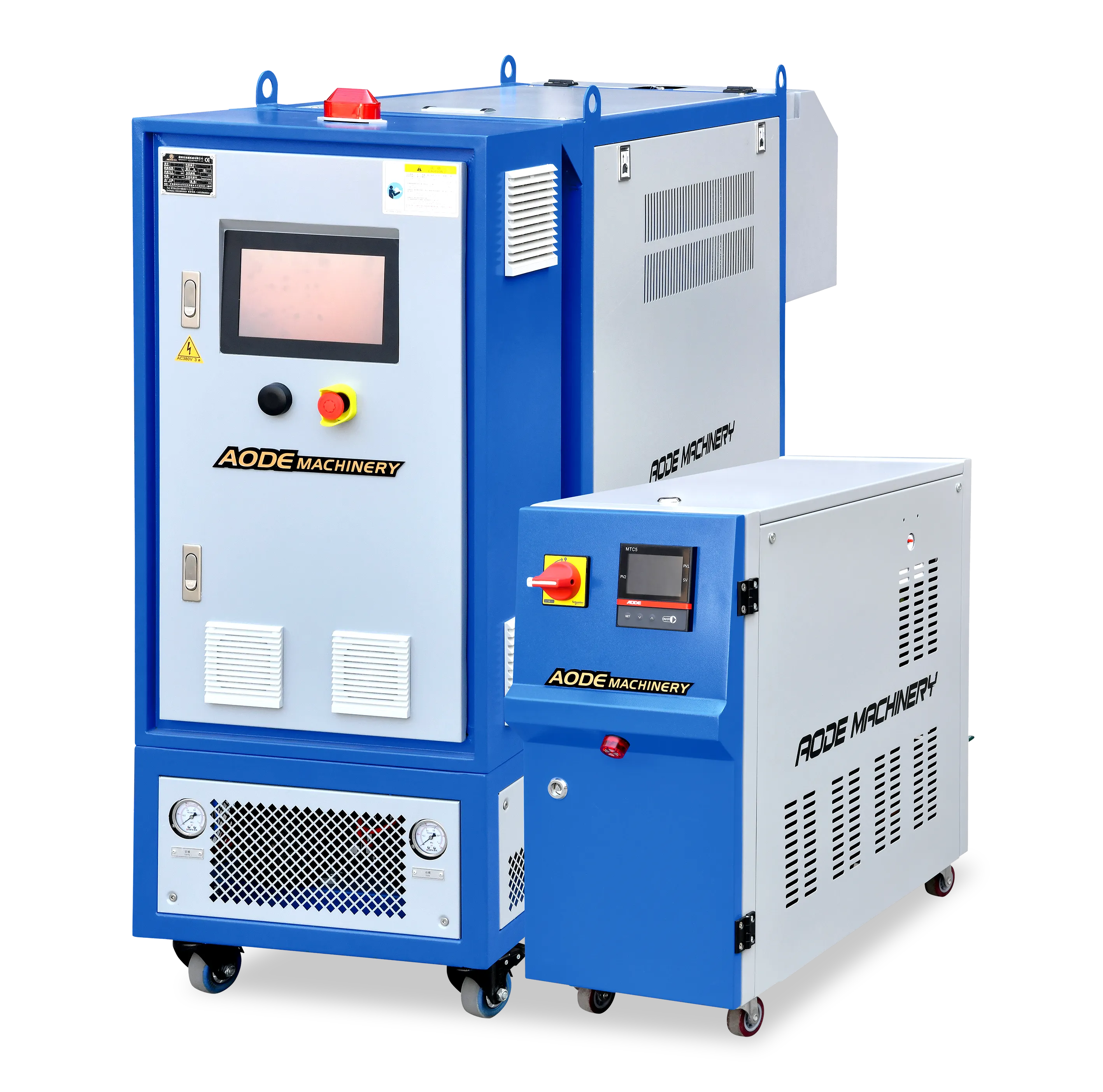
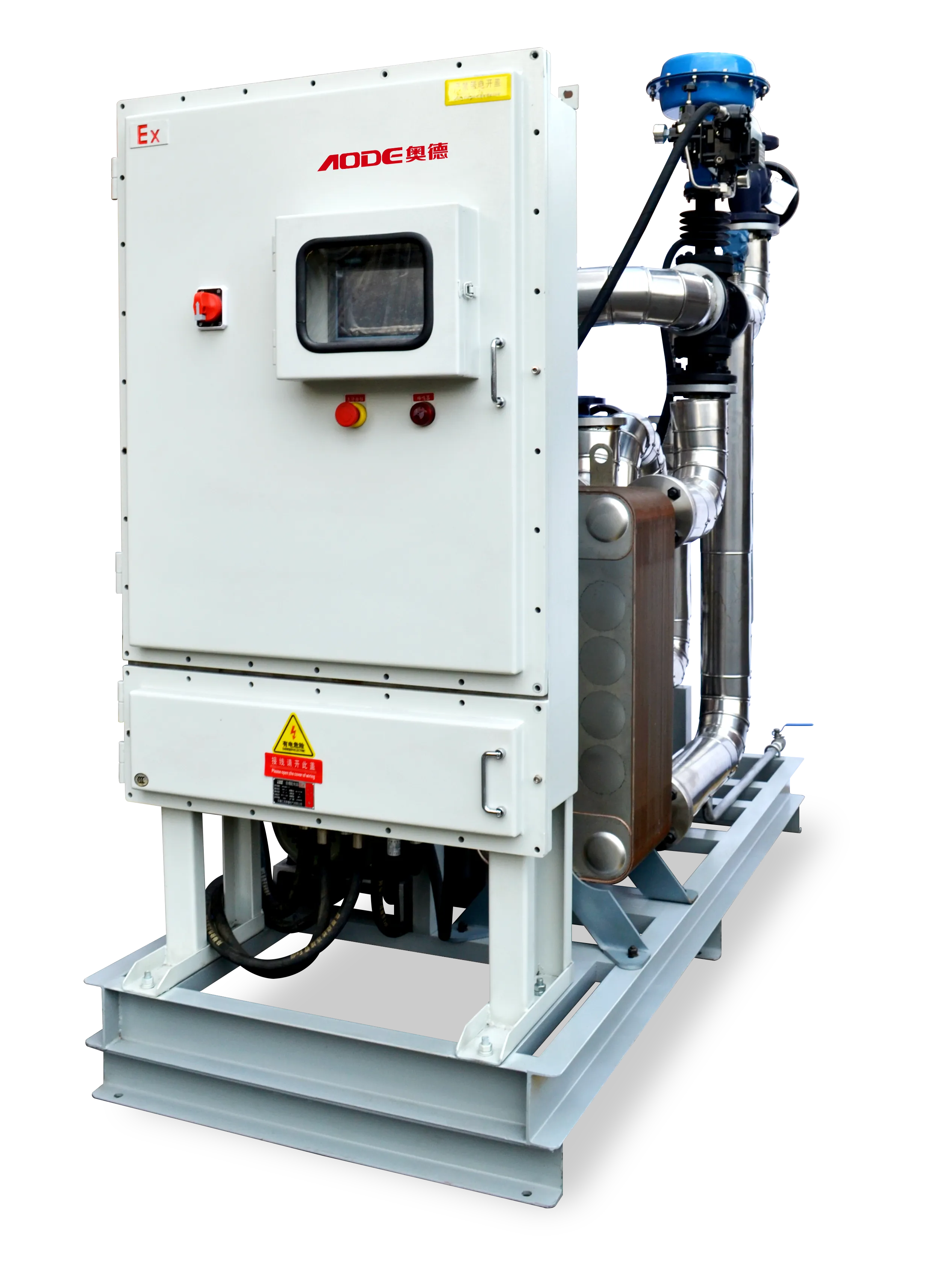
Maintaining consistent production conditions requires more than adjusting the extruder's heating zones. Selected machine components also need effective cooling or temperature regulation. A water temperature control unit (TCU) helps manage these requirements by supplying temperature-controlled water to designated equipment circuits.
Why Is Temperature Control Important in Cable Extrusion?
During extrusion, polymer pellets are conveyed and melted inside the barrel before passing through the extrusion head to form an insulation or protective layer around the conductor. The material receives heat from barrel heaters as well as mechanical shear generated by the rotating screw. Both sources influence the final melt temperature and processing behavior.
If the material becomes excessively hot, some polymers may experience thermal degradation. Insufficient heating can leave the melt inadequately plasticized, making material flow less consistent. These conditions may affect insulation thickness, surface appearance, and dimensional consistency.
The challenge becomes more demanding during continuous production, when changes in screw speed and material throughput can alter the thermal load. Maintaining a suitable temperature profile helps keep the extrusion process within the material's processing window.
Which Parts of Cable Extrusion Equipment Need Temperature Regulation?
Different sections of an extrusion line have different thermal requirements. Barrel heaters manage polymer melting, whereas water circulation is used in selected areas to remove excess heat or maintain specific equipment temperatures.
Extruder Barrel and Feed Throat
The barrel is divided into heating zones to support material conveying, melting, and homogenization. At the feed throat, however, excessive heat can soften polymer pellets prematurely, interfering with material feeding and potentially causing bridging or unstable output.
Water cooling is commonly applied around this area to maintain suitable feeding conditions. This is a good example of why heating and cooling need to work together rather than operate as independent functions.
Screw and Extrusion Head
Mechanical shear generated during screw rotation contributes to the extruder's thermal load. Depending on the machine design, internal water circulation may be used to remove excess heat from the screw or associated components.
The extrusion head has a different requirement. It directs molten polymer around the conductor, and its internal flow channels need suitable thermal conditions to support consistent material distribution. Some cable extrusion systems therefore use independent water-tempering circuits for the screw and crosshead, particularly in multilayer cable production.
Downstream Cable Cooling
Once the polymer leaves the extrusion head, the cable enters a separate cooling stage. This stage removes heat from the newly formed insulation or sheath and helps the material reach its required dimensions and physical condition.
It is important to distinguish this process from TCU circulation. A water temperature control unit regulates the connected machine circuit, while downstream cooling acts directly on the extruded cable.
How Does a Water Temperature Control Unit Maintain Stable Extrusion Conditions?
A water TCU maintains the temperature of circulating water through a combination of heating, cooling, and continuous circulation. Water absorbs or transfers heat as it passes through the connected equipment, then returns to the unit for temperature adjustment.
PID control is central to this process. The controller monitors the water temperature and adjusts heating or cooling output according to the selected setpoint. For example, AODE's AEX extrusion temperature control series specifies ±1°C PID control accuracy, with an operating temperature range of +25°C to +120°C.
Circulation performance is equally important. If water flow is insufficient, heat may not be removed effectively even when the TCU reaches its target temperature. AODE offers different pump configurations across the AEX range, with rated flows of 35, 100, and 180 L/min and corresponding pump heads of 20–24 m. The appropriate combination depends on the connected circuit's pressure loss and heat transfer requirements.
Startup and continuous production can also place different demands on the system. Electric heating helps prepare the circulating water, while direct cooling removes excess heat during operation. By coordinating these functions, the TCU supports the temperature requirements of its connected equipment without replacing the extruder's own polymer heating controls.
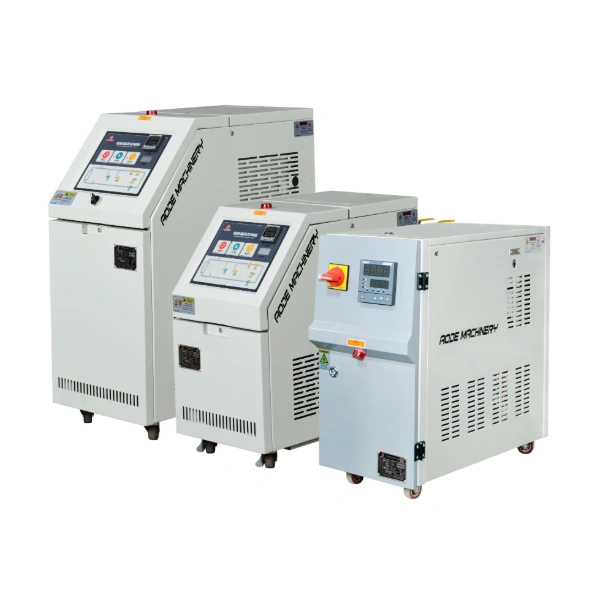
AODE Water Temperature Control Application in Cable Extrusion
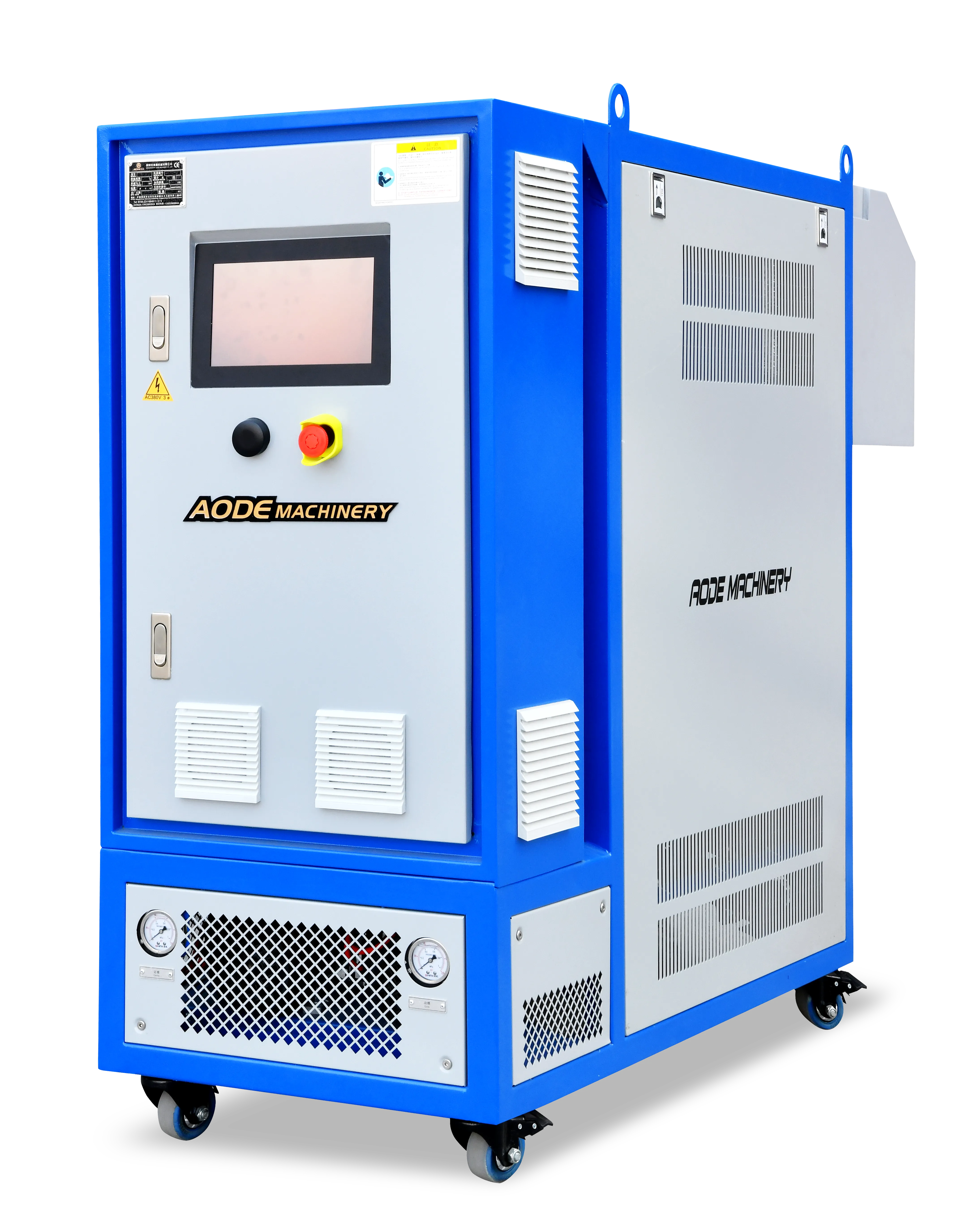
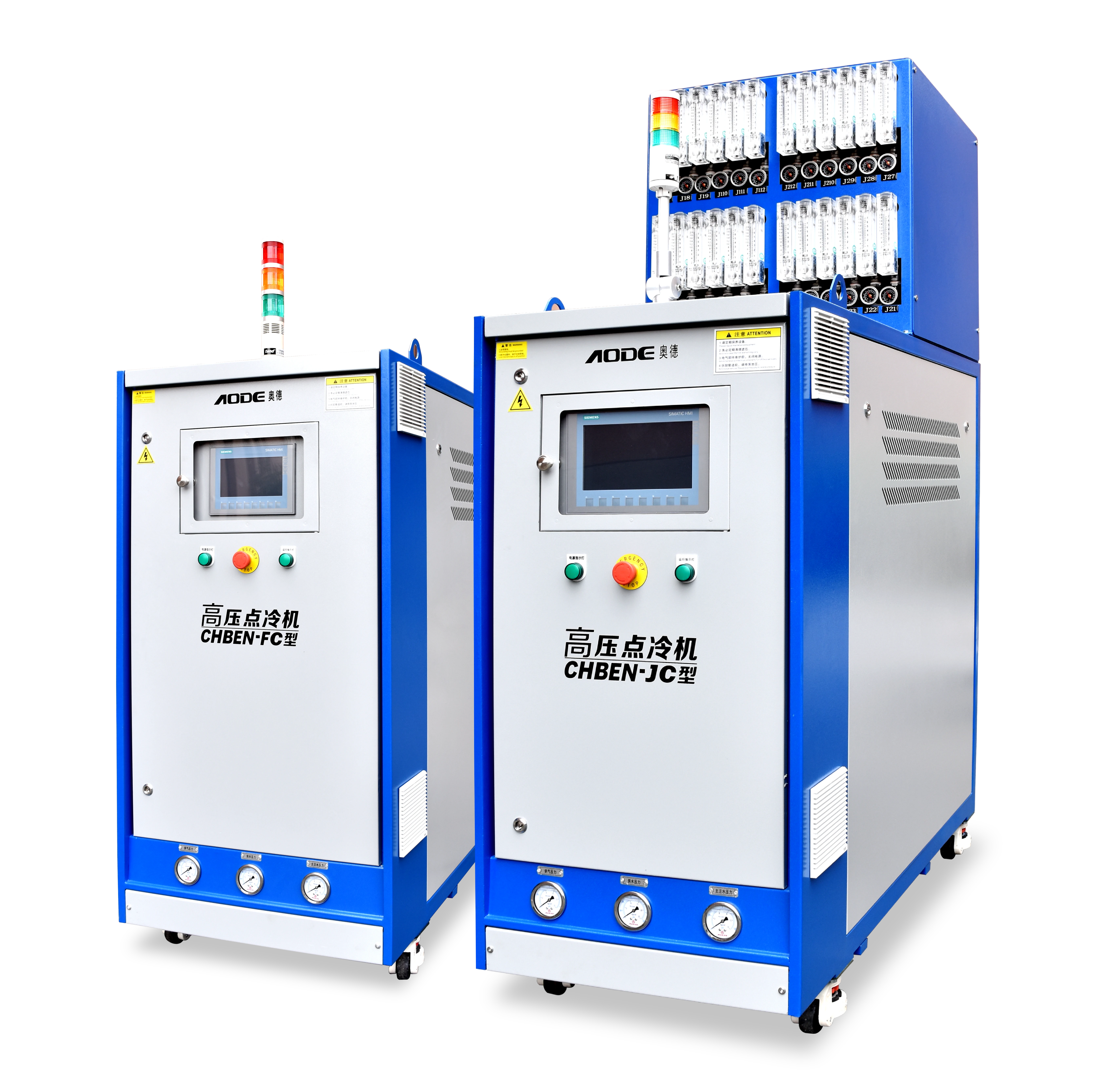
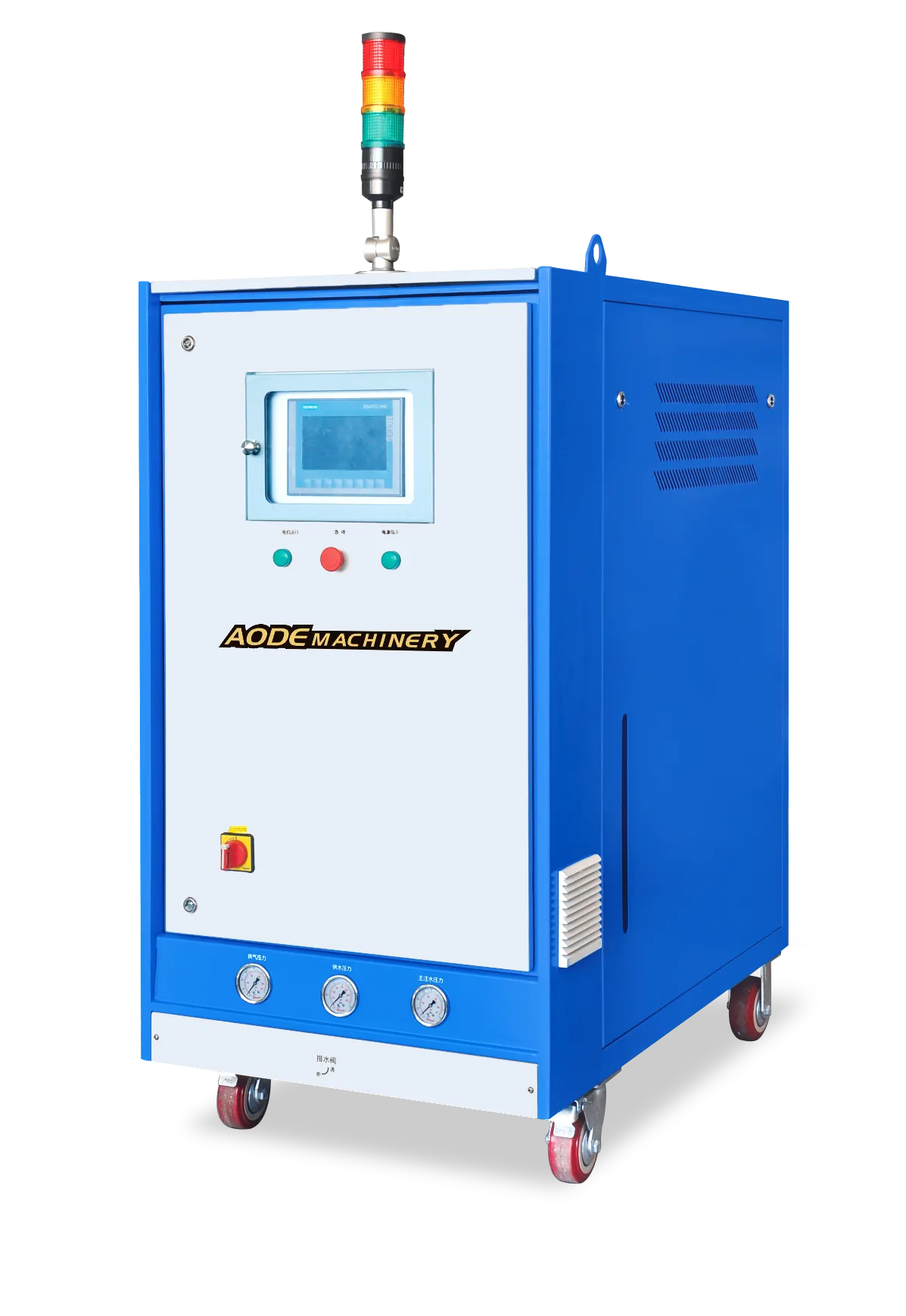
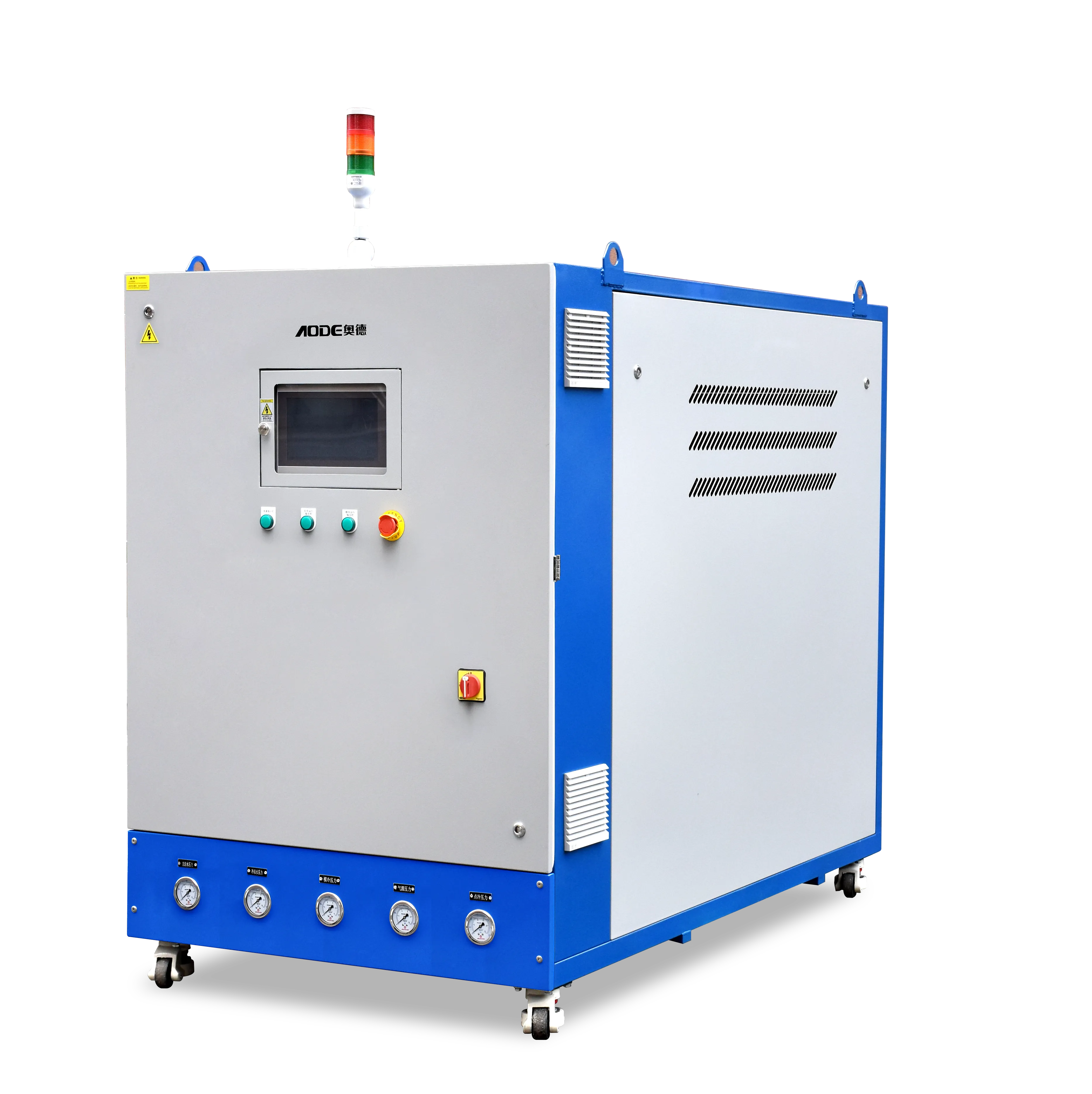
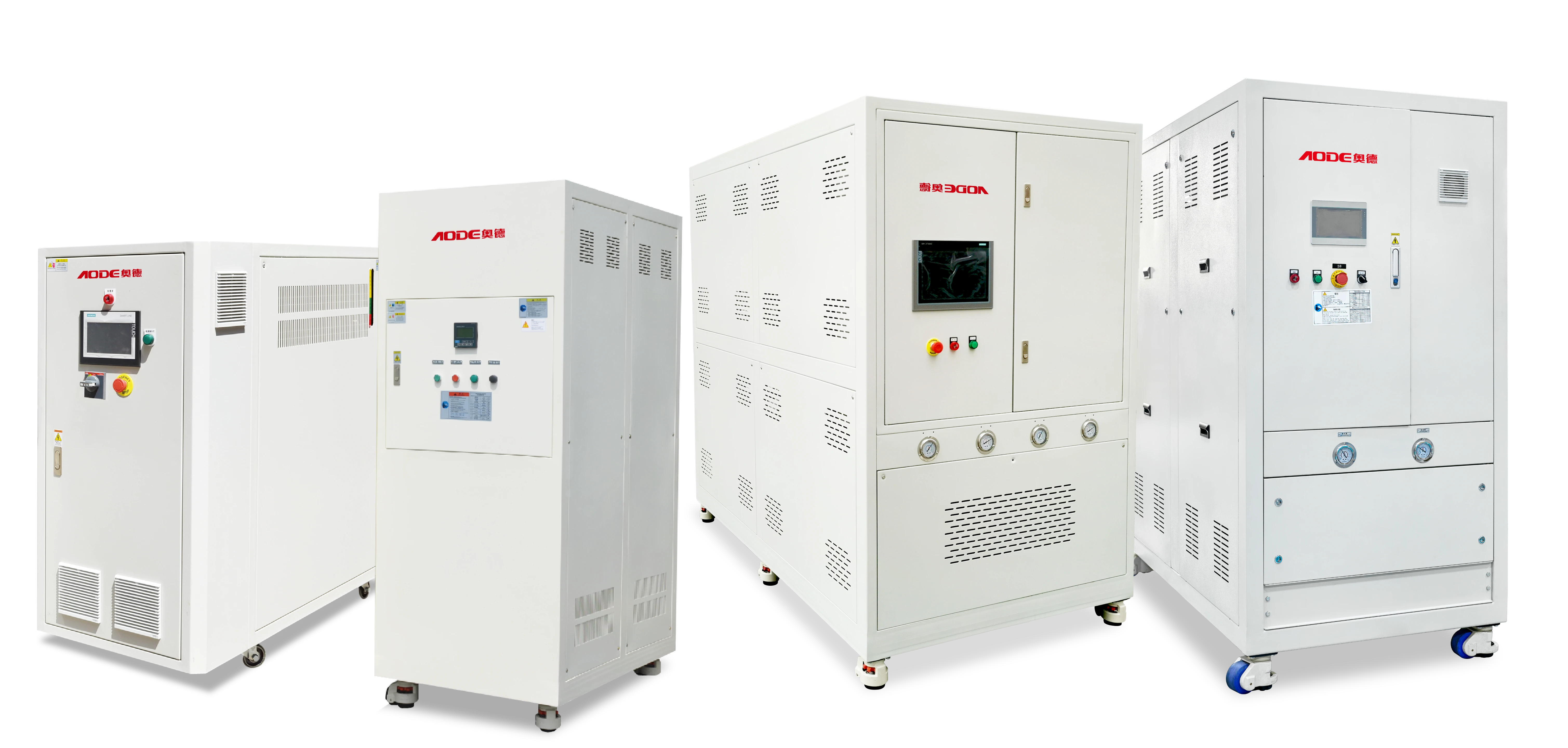
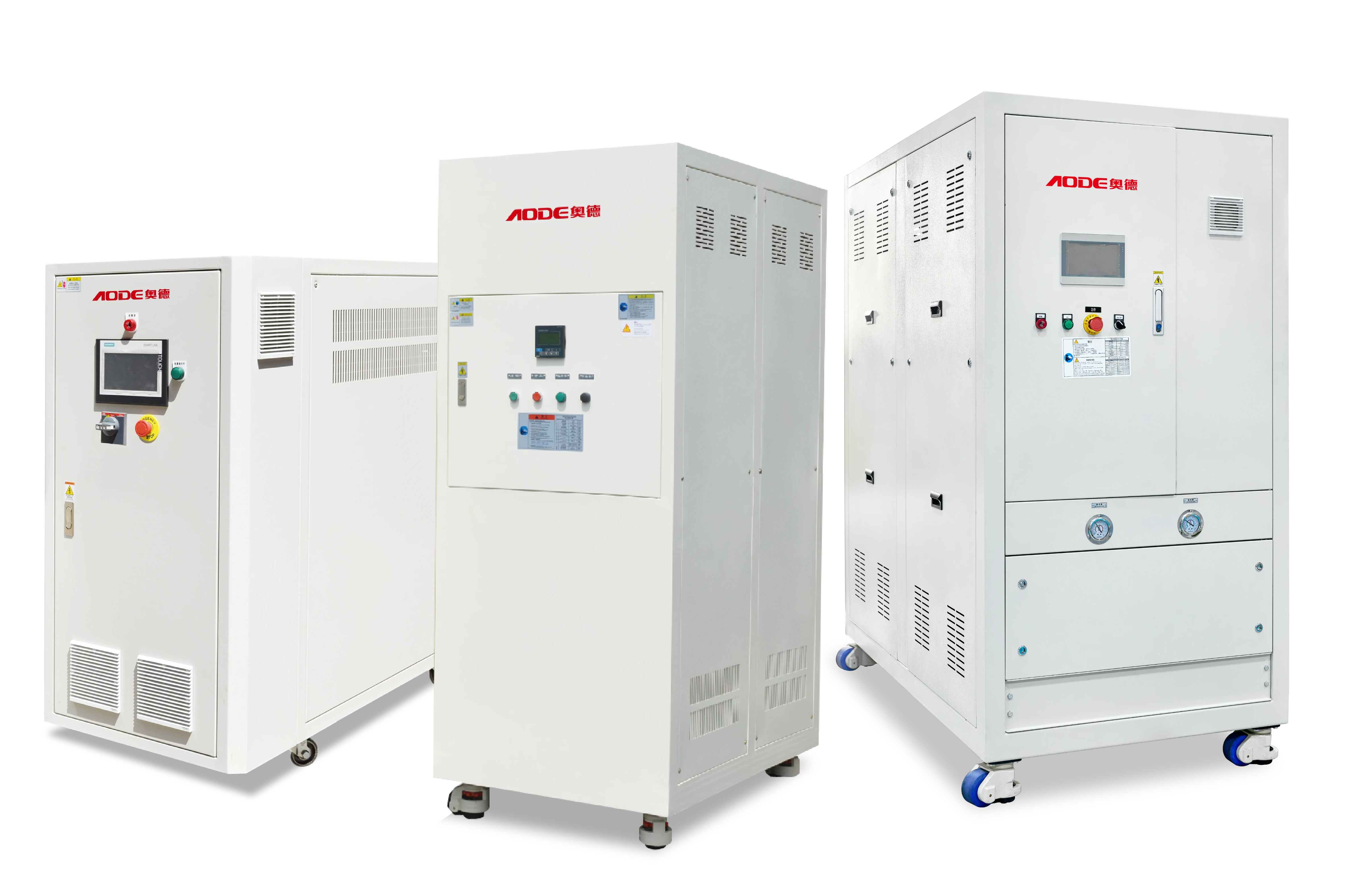
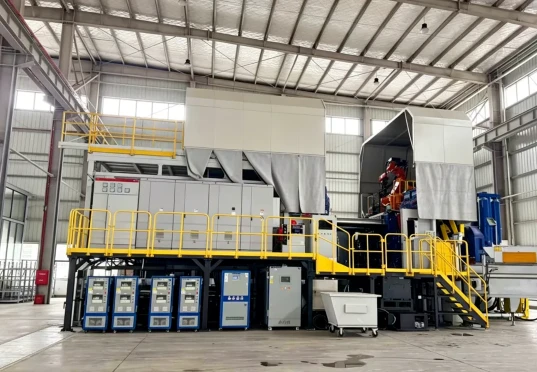
AODE has supplied water temperature control equipment for cable extrusion production. The project photograph shows the TCU installed alongside the extrusion machinery as part of the industrial production setup.
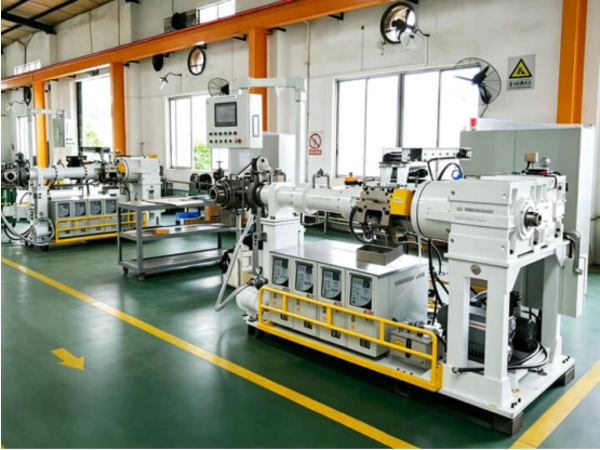
The AEX Series is designed for extrusion-related temperature control applications where equipment requirements may differ in heating capacity, circulation flow, and the number of controlled circuits. Single-circuit configurations include heating capacities of 3, 4, and 9 kW, while multi-circuit versions offer 4 × 3 kW and 4 × 4 kW arrangements.
These options allow the equipment configuration to be matched to the connected machinery rather than applying one standard specification to every extrusion line. The units also incorporate water shortage, excessive temperature, overload, and pump reversal alarms, helping operators identify abnormal operating conditions during production.
The specific model and water circuit connection in the photographed project have not yet been confirmed. Therefore, these figures describe the AEX product range rather than the verified operating parameters of this particular installation.
How to Select a Water TCU for Cable Extrusion?
Selecting a suitable unit starts with identifying which equipment component requires water temperature regulation. A screw cooling circuit, for example, may have different flow and temperature requirements from a crosshead tempering circuit.
Before choosing a model, manufacturers should provide the required water supply temperature, estimated heat load, circulation flow, operating pressure, and pipe connection details. The number of independent circuits also needs to be confirmed, particularly when several extrusion components operate at different temperatures.
These details help determine the required heating capacity, cooling performance, and pump configuration. A higher-rated pump or heater does not automatically mean better temperature control; the equipment must match the actual thermal and hydraulic conditions of the connected system.
AODE can assess these requirements and recommend a suitable standard or customized water temperature control configuration for cable extrusion applications.
Frequently Asked Questions
Why Is Water Cooling Used in Cable Extrusion?
Water cooling removes excess heat from designated equipment components, such as feed throat or internal screw cooling circuits. It helps maintain suitable operating conditions when heat generated during extrusion exceeds the required level.
Does a Water TCU Control Polymer Melt Temperature?
Not directly. A water TCU regulates its connected water circuit, while polymer melt temperature is influenced by barrel heating, screw speed, mechanical shear, and material properties.
Can One Water TCU Serve Multiple Extrusion Circuits?
Yes, provided its heating and cooling capacity, pump performance, and control arrangement are suitable. Where circuits have different temperature requirements, independent control may be necessary.
What Is the Temperature Control Accuracy of AODE's AEX Series?
The AEX Series specifies PID water temperature control accuracy of ±1°C, with an operating temperature range of +25°C to +120°C. Actual operating performance depends on the connected equipment and thermal conditions.
Conclusion
Stable cable extrusion depends on coordinating polymer heating with the cooling requirements of the production equipment. While barrel temperature determines how the material melts and flows, designated water circulation circuits help manage excess heat in selected machine components.
AODE's AEX extrusion temperature control series combines PID regulation, electric heating, direct cooling, and different pump configurations to support these applications. Manufacturers can provide their equipment and circulation requirements to AODE for a suitable temperature control solution.
References
Qenos – Extrusion Technical Guide 02 https://qenos.com/internet/home.nsf/%28LUImages%29/TG2Extrusion/%24File/TG2Extrusion.pdf
Maillefer – Integrated Water Tempering IWT 300 https://www.maillefer.net/en/component/integrated-water-tempering-iwt-300/
Maillefer – Medium Voltage Catenary Continuous Vulcanizing https://www.maillefer.net/en/technology/mv-hv-ehv-medium-voltage-catenary-continuous-vulcanizing/
AODE – Water Temperature Control Unit https://www.mouldtcu.com/products/water-temperature-control-unit.html
 Back to List
Table of Contents
×
CONTACT US
Cookie Policy
We use cookies and other tracking technologies online. Please read our Cookie Policy, which is part of this Cookie Policy , and is incorporated herein by reference.

loading...